
 Image 1 of 3
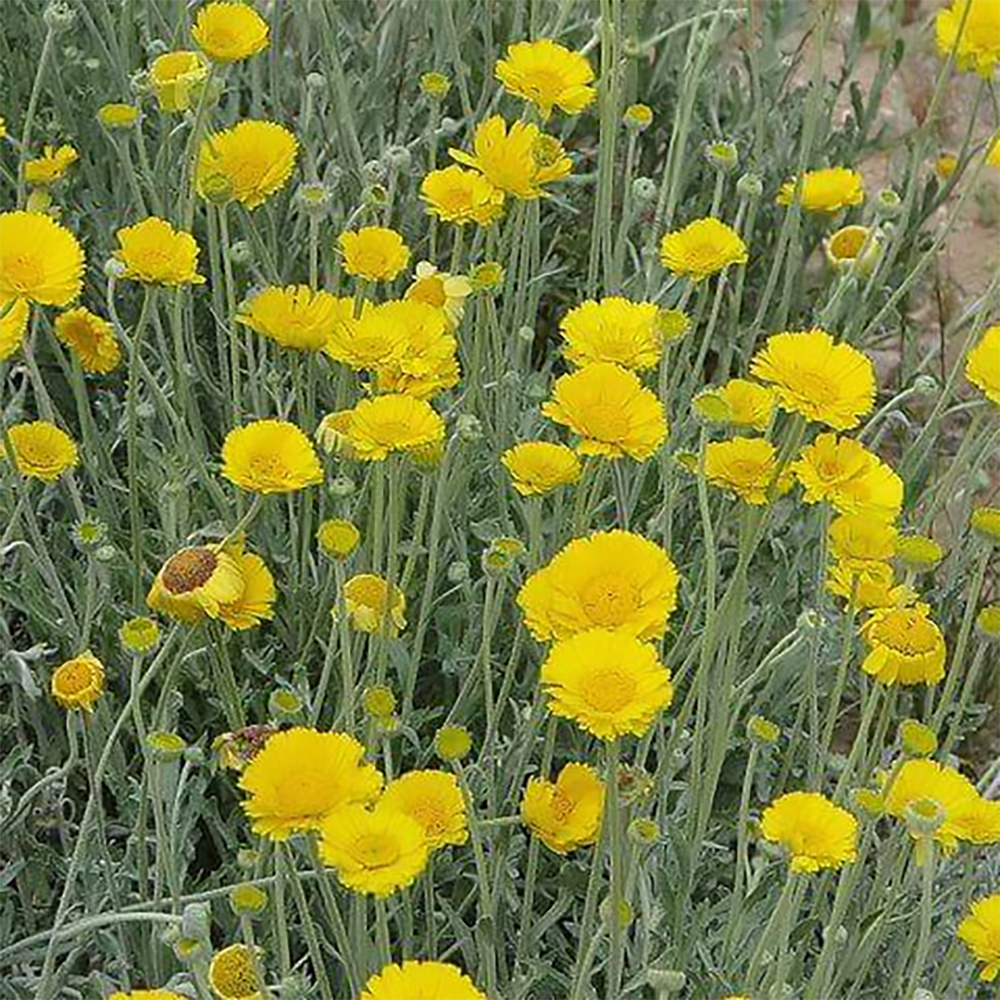 Image 2 of 3
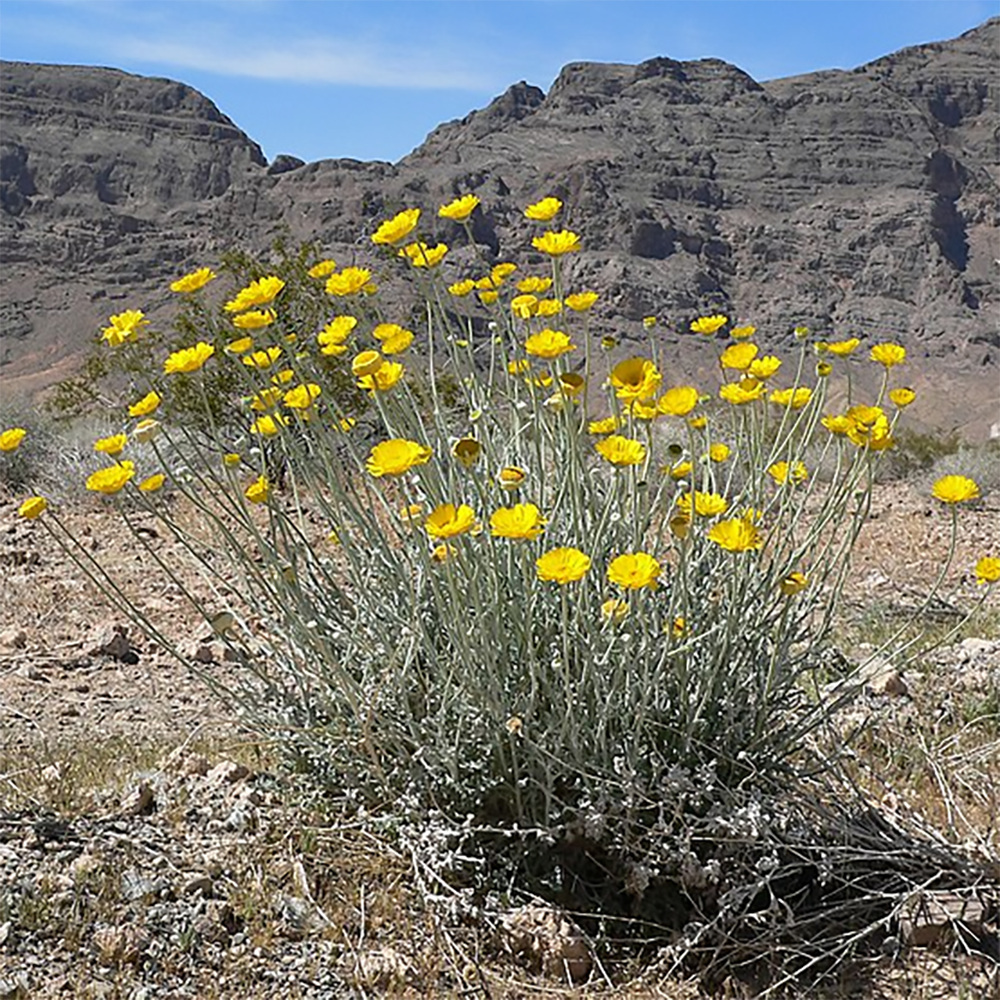 Image 3 of 3
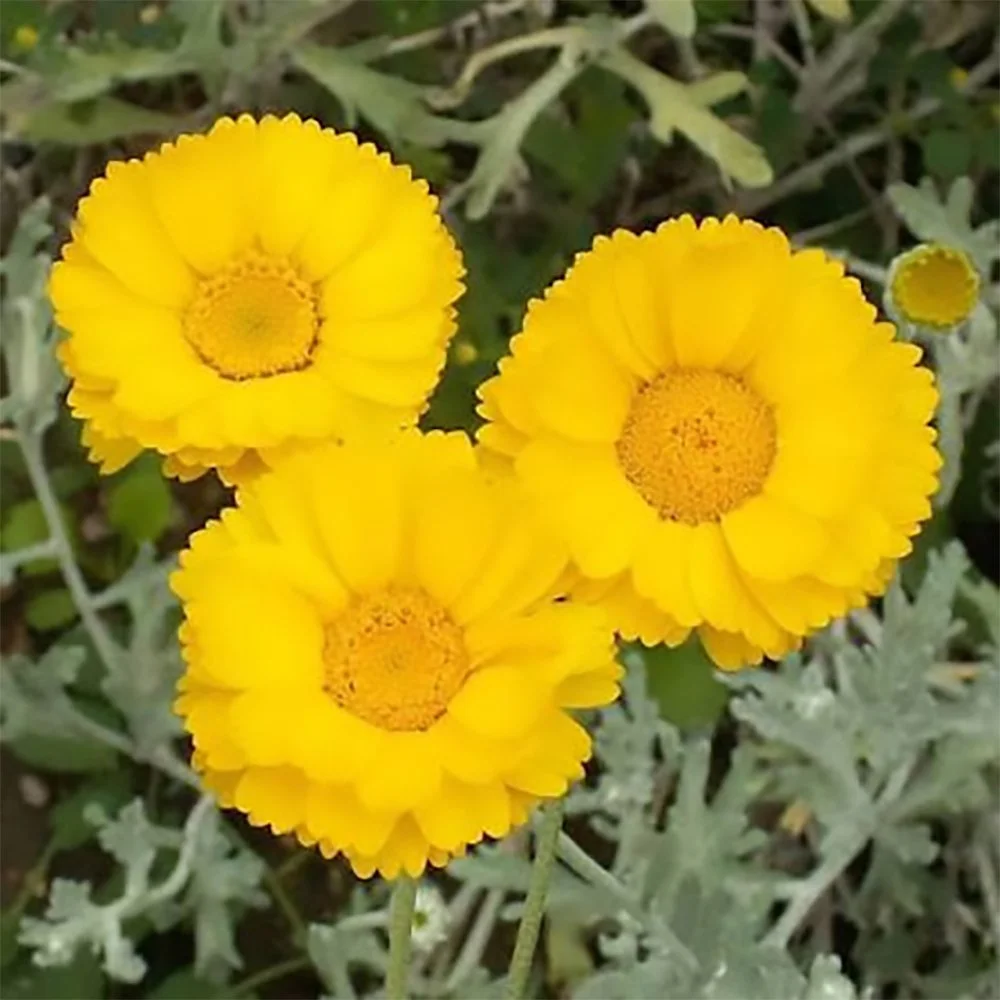
Baileya multiradiata, commonly known as Desert Marigold, is a cheerful, drought-tolerant wildflower native to the deserts of the southwestern United States and northern Mexico. Its silvery-green, softly textured foliage forms rounded clumps approximately 12–18 inches tall and 12–24 inches wide, topped with bright golden-yellow, daisy-like flowers. Blooms appear primarily from spring through fall, often continuing after seasonal rainfall. The flowers attract native bees and other beneficial pollinators, making Desert Marigold an excellent addition to water-wise landscapes and native wildflower gardens.
Desert Marigold thrives in full sun and sandy, gravelly, well-draining soil. Once established, it requires very little supplemental water and tolerates intense desert heat, including temperatures above 100°F. Generally suited to USDA Zones 7–10, established plants can withstand brief freezes, although prolonged cold and wet soil may cause damage. Sow seeds directly outdoors in fall in low-desert regions or in spring after the danger of hard frost in colder climates. Lightly press seeds into prepared soil and keep the surface gently moist until germination. Avoid overwatering and heavy, poorly drained soils.
THIS LISTING IS FOR A PACK OF APPROX. 6,000 SEEDS (1/10 OZ.)
Baileya multiradiata, commonly known as Desert Marigold, is a cheerful, drought-tolerant wildflower native to the deserts of the southwestern United States and northern Mexico. Its silvery-green, softly textured foliage forms rounded clumps approximately 12–18 inches tall and 12–24 inches wide, topped with bright golden-yellow, daisy-like flowers. Blooms appear primarily from spring through fall, often continuing after seasonal rainfall. The flowers attract native bees and other beneficial pollinators, making Desert Marigold an excellent addition to water-wise landscapes and native wildflower gardens.
Desert Marigold thrives in full sun and sandy, gravelly, well-draining soil. Once established, it requires very little supplemental water and tolerates intense desert heat, including temperatures above 100°F. Generally suited to USDA Zones 7–10, established plants can withstand brief freezes, although prolonged cold and wet soil may cause damage. Sow seeds directly outdoors in fall in low-desert regions or in spring after the danger of hard frost in colder climates. Lightly press seeds into prepared soil and keep the surface gently moist until germination. Avoid overwatering and heavy, poorly drained soils.
THIS LISTING IS FOR A PACK OF APPROX. 6,000 SEEDS (1/10 OZ.)