
Beautiful plants. Less water. More life.
At Desert Roots Nursery, we believe beautiful landscapes can flourish while using less water. As water becomes an increasingly precious resource, we’re passionate about offering plants that are naturally resilient, water-wise, and rewarding to grow—whether you live in the desert or simply want to garden more sustainably. From striking succulents and cacti to drought-tolerant trees, shrubs, and garden favorites, we carefully select plants that can thrive with thoughtful, water-conscious care. Whether you’re creating a desert-inspired landscape, replacing thirsty plants, adding low-water beauty to your garden, or growing a collection at home, we’re here to help you choose plants that fit your space and your lifestyle.
Rooted in the desert. Grown with care. Saving water for what matters.
Products
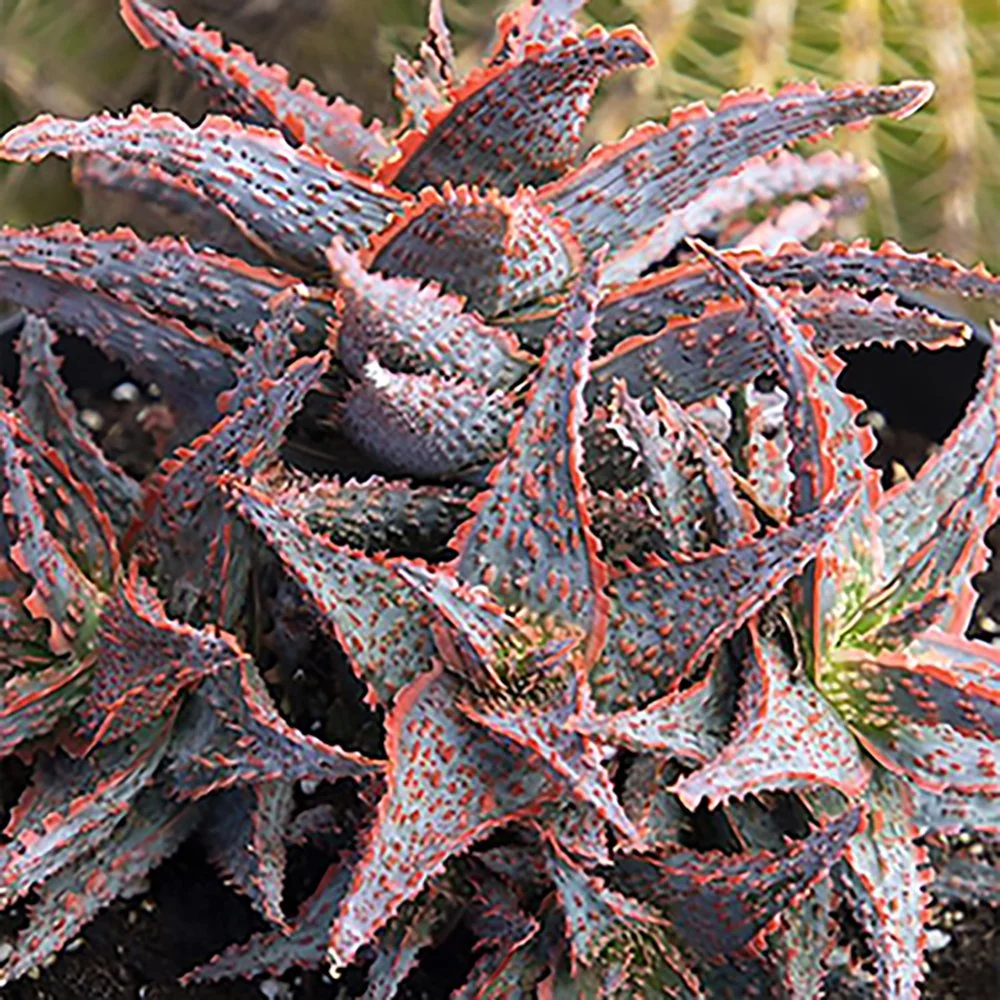
Aloe ‘Oik’ is a striking compact aloe prized for its attractive rosette, fleshy green leaves, and vibrant orange-red flowers. This easy-care succulent is an excellent choice for containers, rock gardens, patios, and sunny windowsills. It thrives in full sun to bright filtered light, warm temperatures, and fast-draining soil. Mature plants typically remain compact, making them perfect for small spaces and succulent collections. Best suited to USDA Zones 9–11, it handles hot conditions around 90–105°F when established but should be protected from frost and prolonged temperatures below 30°F. Water deeply but infrequently, letting the soil dry thoroughly between waterings, and reduce watering during cooler months. With its compact growth, attractive foliage, and colorful blooms, Aloe ‘Oik’ is a beautiful addition to any succulent collection. (Toxic to pets if ingested!)
THIS LISTING IS FOR A YOUNG BARE-ROOT SPECIMEN, 3–7 INCHES TALL. Plant in well-draining soil and watch it grow!
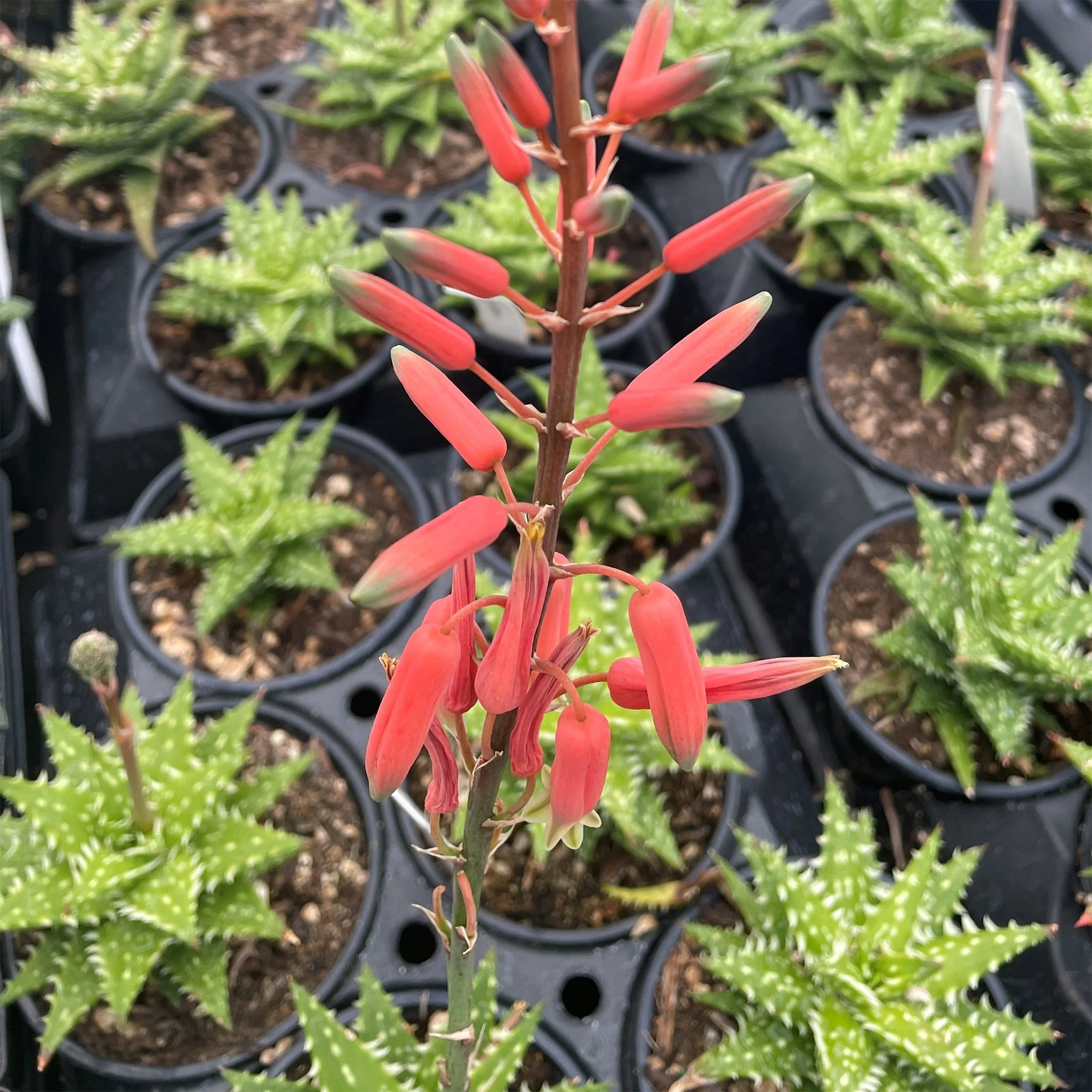
Aloe ‘Minnie Belle’, commonly known as Minnie Belle Aloe, is a compact, colorful aloe prized for its striking green leaves with reddish-brown teeth and vibrant orange-red flowers. This attractive hybrid forms neat clusters and works well in containers, succulent gardens, rockeries, and sunny patios. Developed from Aloe descoingsii × Aloe haworthioides, it is a cultivated hybrid with parent species native to Madagascar. Mature plants typically reach 12–18 inches tall and wide. Hardy in USDA Zones 9–11, it thrives in full sun to bright filtered light and well-draining soil, tolerating 90–105°F. Protect from frost and temperatures below 30°F. Water deeply but infrequently, allowing soil to dry between waterings. (Toxic to pets if ingested!)
THIS LISTING IS FOR A YOUNG BARE-ROOT SPECIMEN, 2–5 INCHES TALL. Plant in well-draining soil and watch it grow!

Euphorbia obesa, commonly called the Baseball Plant, Baseball Cactus, or Sea Urchin Plant, is a unique South African succulent prized for its rounded, striped form. Native to the dry Great Karoo region, it is adapted to hot, arid conditions and periods of drought. Slow-growing and compact, mature plants typically reach about 4–6 inches tall and wide. Provide bright light to full sun, excellent drainage, and allow the soil to dry completely between waterings. It thrives in hot weather around 90–100°F but should be protected from frost and temperatures near 30°F or lower. Reduce watering during winter. Euphorbia obesa is Endangered on the IUCN Red List, making responsibly nursery-propagated specimens especially valuable. Like other Euphorbias, it produces irritating milky sap when damaged; handle with care.
THIS LISTING IS FOR A YOUNG POTTED SPECIMEN, 1–2 INCHES ACROSS. Water sparingly and watch it grow!
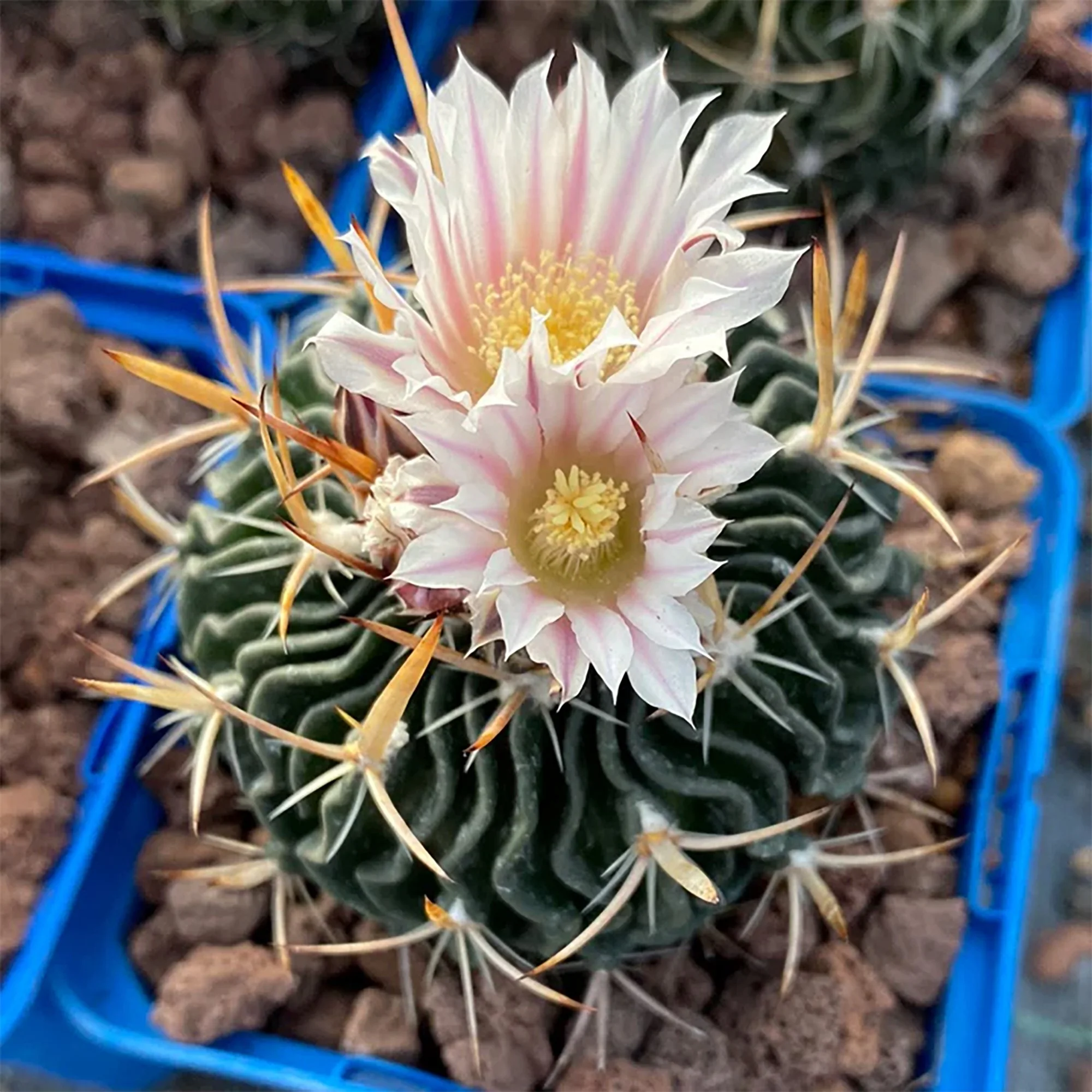
Echinofossulocactus crispatus (Stenocactus crispatus), commonly known as Brain Cactus, is a distinctive, slow-growing Mexican cactus prized for its deeply undulating, brain-like ribs and sculptural form. Native to north-central Mexico, including Hidalgo, Querétaro, Veracruz, Oaxaca, and Puebla, it grows naturally in dry shrubland and desert habitats. Mature plants typically reach 4–8 inches tall and 3–4 inches wide, making them excellent container and rock-garden plants. It thrives in bright light, excellent drainage, and warm conditions around 90–100°F when kept dry and well-ventilated. During winter, keep it dry; established plants can tolerate brief cold around 25–30°F.
THIS LISTING IS FOR A YOUNG BARE-ROOT SPECIMEN. Plant in well-draining soil and watch it grow!
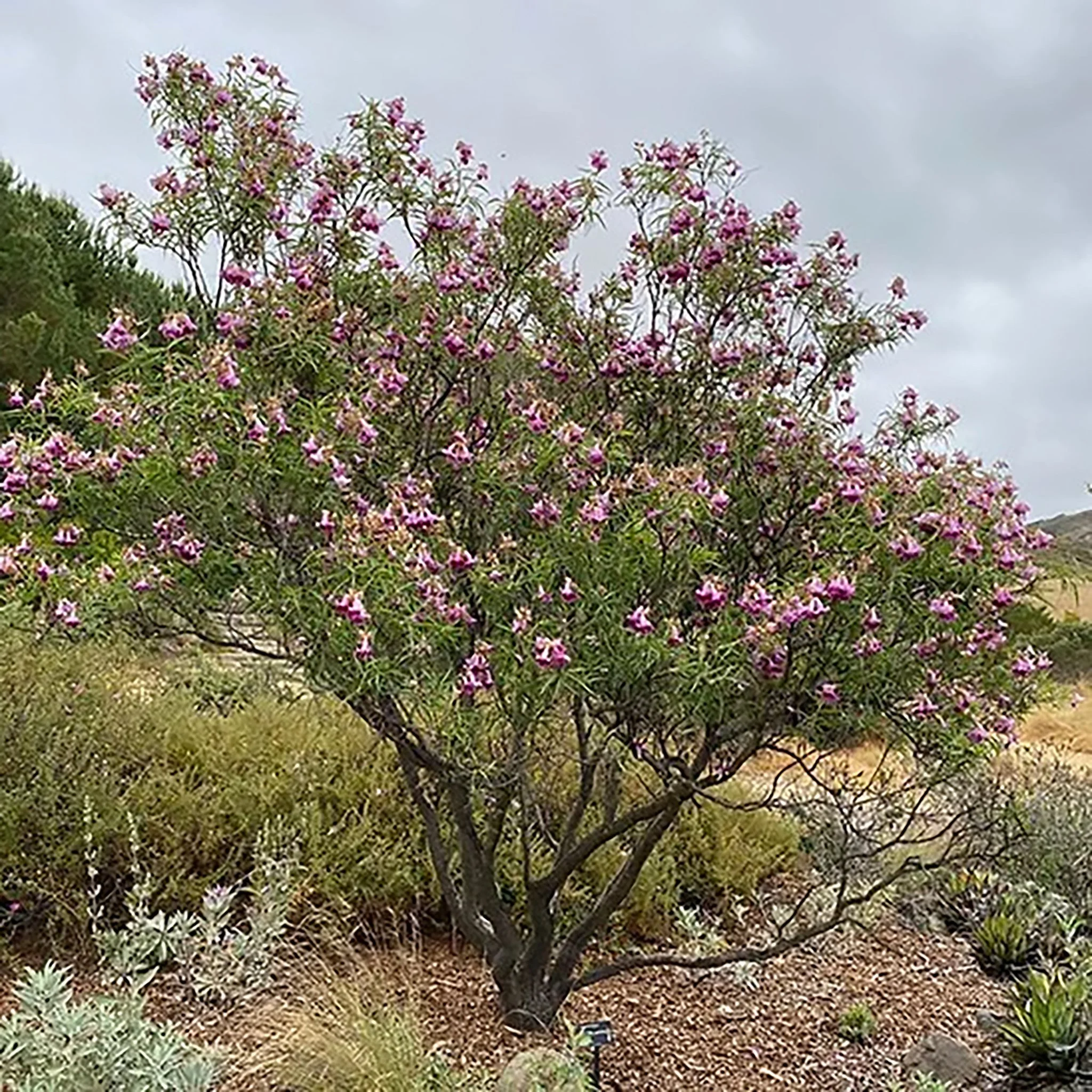
Chilopsis linearis, commonly known as Desert Willow, is a beautiful, fast-growing, drought-tolerant tree native to the Southwestern United States and northern Mexico. Despite its willow-like foliage, it is not a true willow. It produces long, narrow leaves and spectacular trumpet-shaped flowers in shades of pink, lavender, burgundy, and purple that attract hummingbirds and pollinators. Mature trees typically reach 15–30 feet tall and wide. Once established, it thrives in full sun and tolerates intense desert heat around 105–115°F. Established trees can tolerate winter temperatures near 10–20°F. Provide well-draining soil and water deeply but infrequently. A beautiful choice for Southwestern and water-wise landscapes.
Desert Willows are protected under Arizona Native Plant Law, and wild plants cannot simply be removed or collected without the appropriate authorization. Nursery-grown plants should be legally propagated or obtained through permitted sources.
THIS LISTING IS A PACKET OF SEEDS (SELECT QUANTITY). Plant in seedling soil, keep moist, and watch them grow!
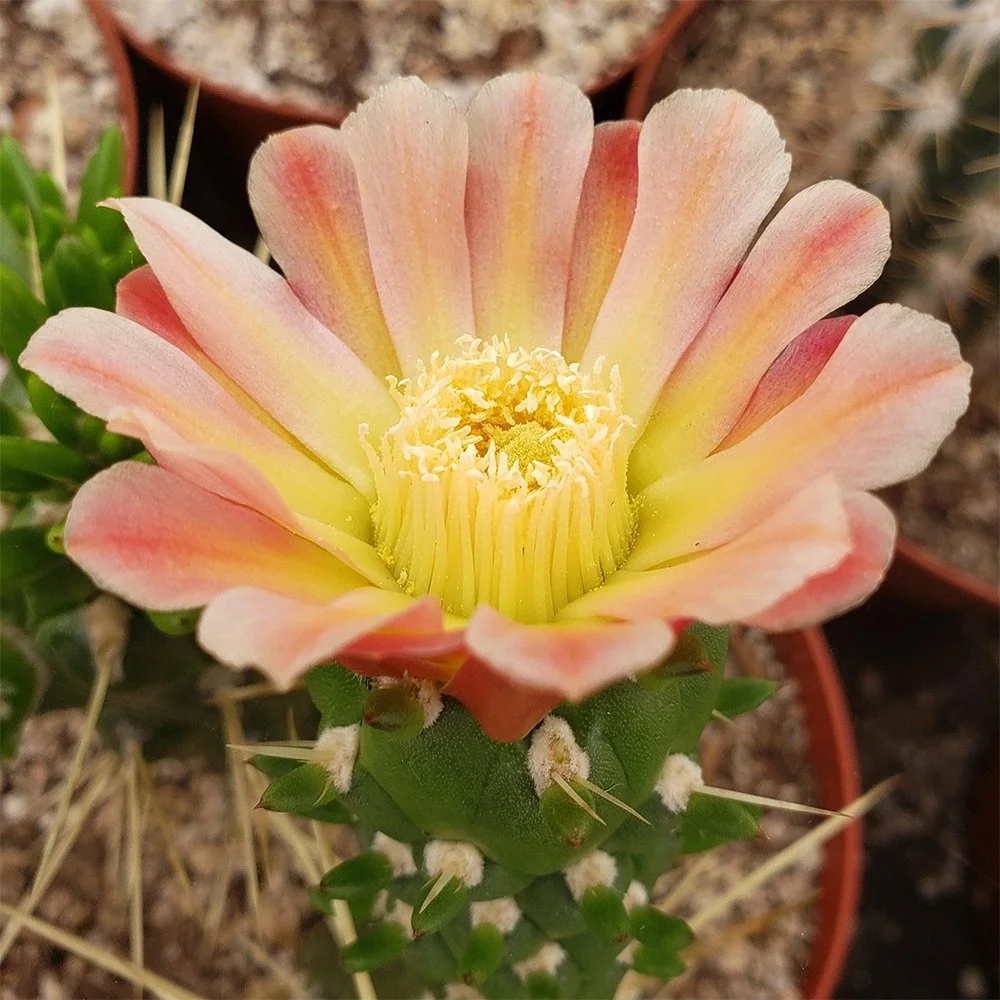
Austrocylindropuntia subulata, commonly known as Eve’s Needle, Eve’s Pin, or Eve’s Needle Cactus, is a distinctive columnar cactus native to the Andes of Peru and Bolivia, prized for its upright, branching growth and long, narrow, cylindrical stems. This fast-growing cactus can eventually become a striking specimen, reaching approximately 10–15 feet tall in the landscape, with mature plants developing a tree-like form and producing small reddish-pink flowers followed by elongated fruit. It thrives in hot, dry conditions around 70–100°F, prefers full sun and extremely well-drained soil, and is highly drought-tolerant once established. Water deeply but infrequently during active growth, and let the soil dry completely between waterings, with reduced watering in winter. Protect young plants from prolonged freezing and temperatures around 25–30°F or lower. A great choice for xeriscapes, desert gardens, cactus collections, and anyone looking for a fast-growing architectural plant with a unique silhouette.
THIS LISTING IS FOR A BARE-ROOT SPECIMEN, 2-4 INCHES TALL.

Give someone the freedom to discover something special at Desert Roots Nursery. A gift card is perfect for exploring our selection of low-water plants, thoughtfully chosen to thrive in the desert while bringing color, texture, and life to any landscape. Plant lovers can also discover rare and unusual cacti and succulents, from unique statement pieces to hard-to-find varieties that make a garden truly their own.
Beyond plants, gift card recipients can browse our collection of garden décor and accents to add personality and character to outdoor spaces. Whether they’re creating a peaceful desert retreat, adding a striking centerpiece, or simply looking for something beautiful and unexpected, a Desert Roots Nursery gift card makes it easy to find the perfect addition.
Give the gift of plants, inspiration, and desert living—something they can enjoy season after season.
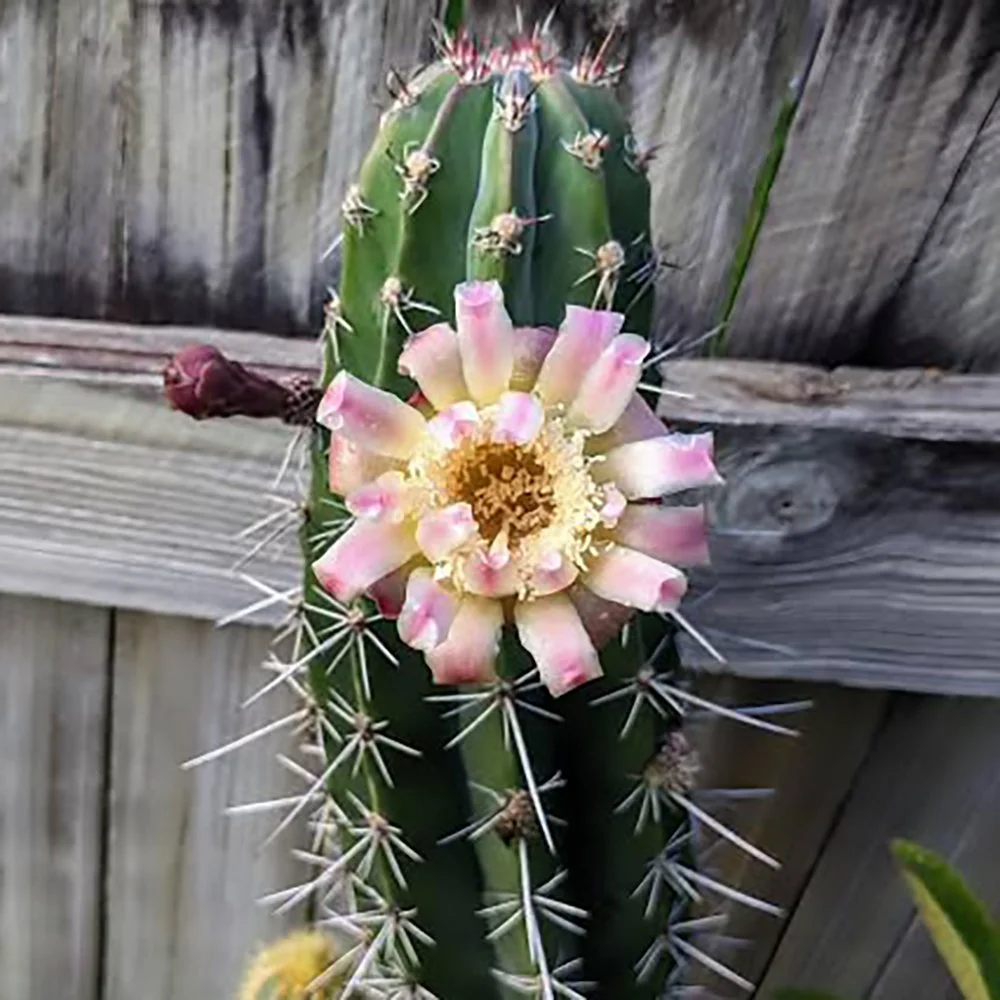
Stenocereus pruinosus, commonly known as Gray Ghost Organ Pipe, Mexican Organ Pipe, Pitayo, or Pitaya of October, is a striking columnar cactus native to Mexico and prized for its powdery blue-green to gray-green stems and dramatic upright form. This fast-growing, heat-loving cactus thrives in warm temperatures around 70–95°F, with protection recommended when temperatures drop below 40°F. It performs best in full sun, extremely well-draining soil, and low-water conditions, making it an excellent choice for xeriscapes, desert landscapes, and large containers. Mature plants can reach about 20 feet tall and develop a distinctive, tree-like branching form. With age, it may produce attractive white to pinkish, night-blooming flowers followed by edible pitaya fruit. Stenocereus pruinosus is generally best suited to USDA Zones 9b–11 and should be protected from prolonged cold and winter moisture.
THIS LISTING IS FOR A BARE-ROOT SPECIMEN, 3-5 INCHES TALL.

Cereus forbesii f. monstrosa, commonly known as Monstrose Blue Torch Cactus, is prized for its striking blue-green color and fascinating twisted, irregular growth. Native to Argentina and Bolivia, this unique monstrose form produces undulating and often branching stems, making every plant beautifully different. Mature specimens can reach 10–20+ feet in suitable landscapes, although growth varies with the monstrose form. Best suited to USDA Zones 9b–11b, it thrives in full sun, excellent drainage, and hot, dry conditions. Established plants can tolerate summer temperatures around 100–115°F and brief cold near 25–30°F when kept completely dry. Protect from frost and prolonged freezing temperatures. Water deeply but infrequently, allowing the soil to dry completely between waterings.
THIS LISTING IS FOR A YOUNG BARE-ROOT SPECIMEN, 5–10 INCHES TALL. Plant in well-draining soil and watch it grow!
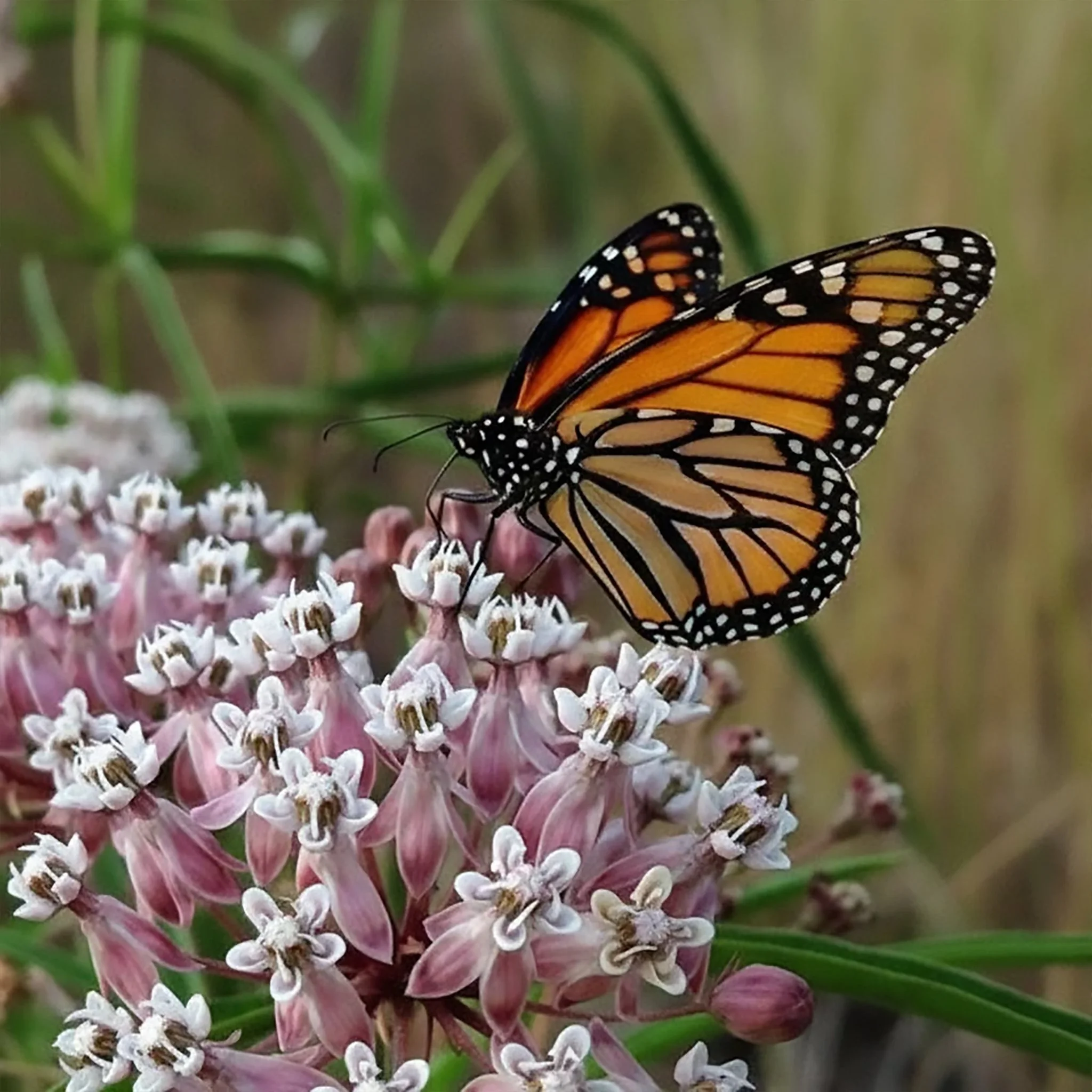
Narrowleaf / Mexican Whorled Milkweed (Asclepias fascicularis) is a beautiful Western native prized for its slender, whorled foliage and clusters of delicate pink, white, and lavender-tinged flowers. Native to much of California and portions of Nevada and Utah, it is an excellent choice for dry Western landscapes, native plant gardens, pollinator gardens, and wildlife habitats within its natural range. Mature plants typically reach 2–4 feet tall and 1–2 feet wide, forming an attractive, upright clump. Best suited to USDA Zones 6–10, it thrives in full sun and well-draining soil and is well adapted to dry conditions once established. Established plants can tolerate summer temperatures around 95–110°F and cold temperatures near -10 to 0°F, depending on conditions and local ecotype. In colder climates, the plant may die back to the ground during winter and regrow in spring. Water regularly while establishing, then reduce watering once established.
Stratification & Germination: Asclepias fascicularis seeds can benefit from cold, moist stratification, which helps break seed dormancy and can improve germination. For best results, place seeds in a lightly moistened medium and refrigerate them for approximately 30 days before sowing. After stratification, sow the seeds on the surface of a well-draining seed-starting mix and press them gently into the soil rather than covering them deeply, as milkweed seeds need light to germinate. Keep the medium evenly moist but not saturated and provide warmth and bright light. Germination can be somewhat irregular, so allow several weeks for seedlings to emerge and avoid discarding seed trays too early. Fresh seed generally provides the best germination, and seedlings should be transplanted carefully once they are well established.
Milkweed contains toxic cardiac glycosides and should be kept away from pets, livestock, and children.
THIS LISTING IS FOR A PACKET OF 25 SEEDS.
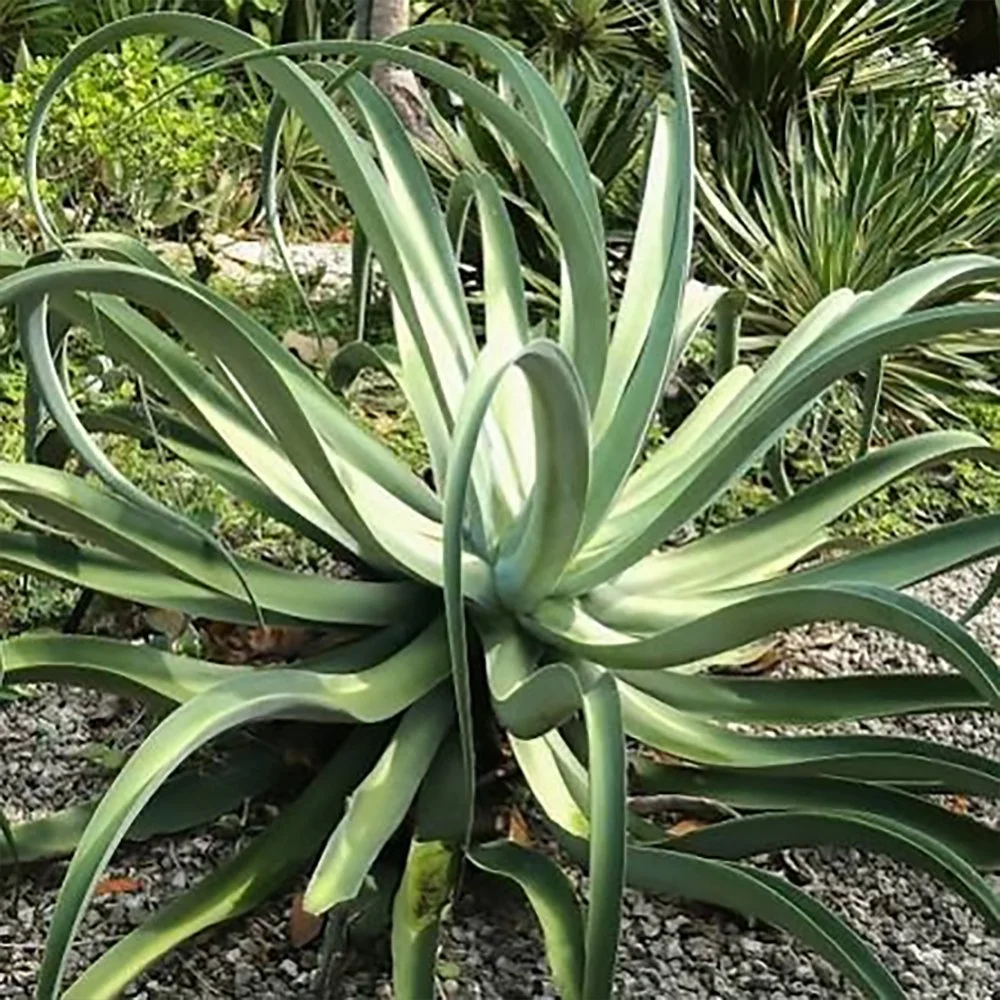
Agave vilmoriniana, commonly called Octopus Agave, is a striking, spineless agave prized for its graceful, unusual form. Native to western Mexico, this distinctive succulent forms a rounded rosette of long, narrow, blue-green leaves that arch and curl dramatically outward, giving the plant an almost tentacle-like appearance. Unlike many agaves, the leaves lack sharp terminal spines, making it an appealing choice for landscapes and containers where people or pets may pass nearby. Mature plants can reach approximately 3–4 feet tall × 4–6 feet wide and thrive in full sun to bright light with exceptionally well-draining soil. Once established, Octopus Agave is highly drought tolerant and requires little supplemental water, making it an excellent choice for xeriscapes, rock gardens, succulent collections, and water-wise landscapes. It performs best in temperatures around 70–100°F and can tolerate brief dips to approximately 25–30°F when established. Protect young plants from hard frost and all plants from prolonged freezing and cold, wet conditions. Generally hardy in USDA Zones 9–11, Agave vilmoriniana is also an excellent container specimen in colder climates. Like other agaves, its sap contains irritating compounds that can cause skin irritation and gastrointestinal upset if ingested; keep away from children and pets.
THIS LISTING IS FOR A BARE-ROOT SPECIMEN, 10-15 INCHES TALL.
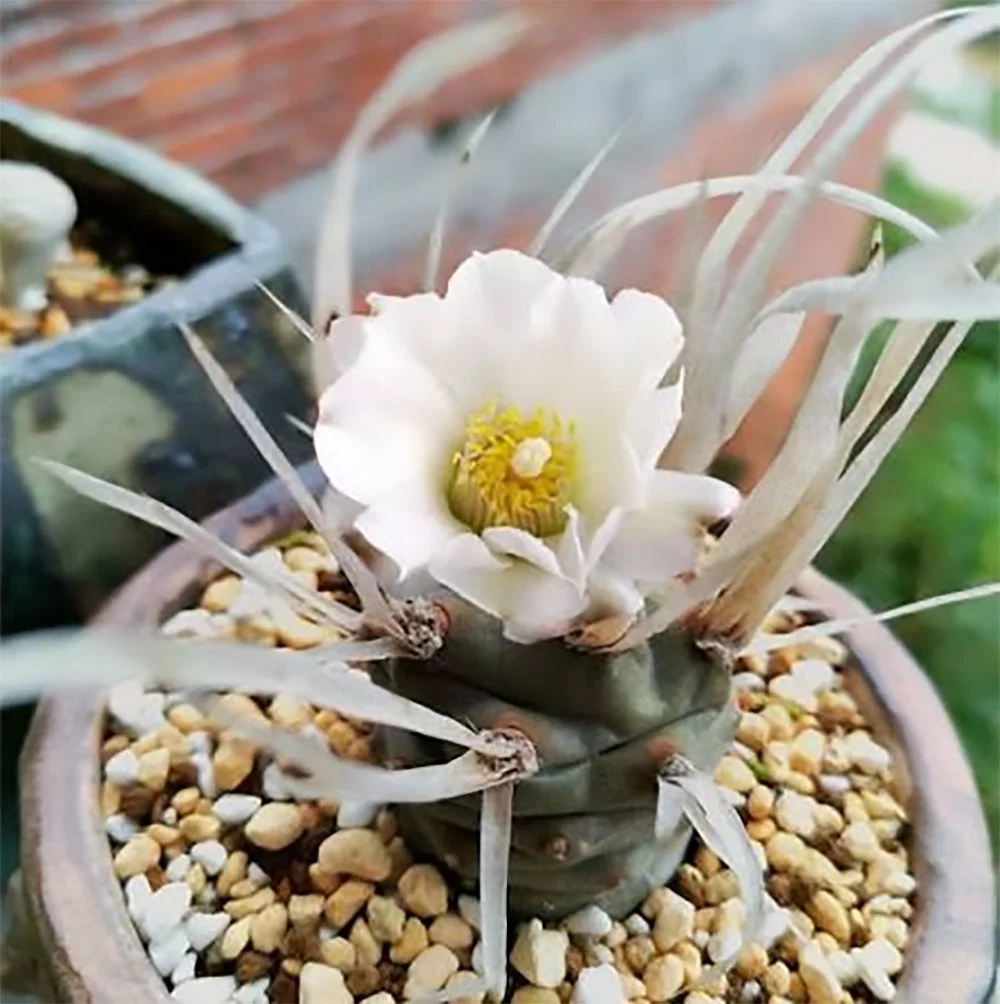
Tephrocactus articulatus var. papyracanthus, commonly known as Paper Spine Cactus, Paper Spine Cholla, or Paper-Spined Cholla, is a distinctive and highly collectible cactus native to western Argentina. Its unusual, pine-cone-shaped, silver-green segments are adorned with flat, translucent, papery spines that resemble delicate ribbons or parchment, giving it a memorable appearance. A slow-growing, low-water plant, it thrives in full sun and extremely well-drained soil, forming a branching cluster approximately 6–12 inches tall and 9–18 inches wide. It is generally suited to USDA Zones 8b–10b and can tolerate brief cold temperatures when kept completely dry. Its easily detached segments also root readily, making it an especially fascinating specimen for collectors and propagation enthusiasts. The variety is considered rare in cultivation, adding to its appeal as a specialty nursery offering.
THIS LISTING IS FOR A BARE-ROOT (SINGLE STALK) SPECIMEN. SELECT SIZE.
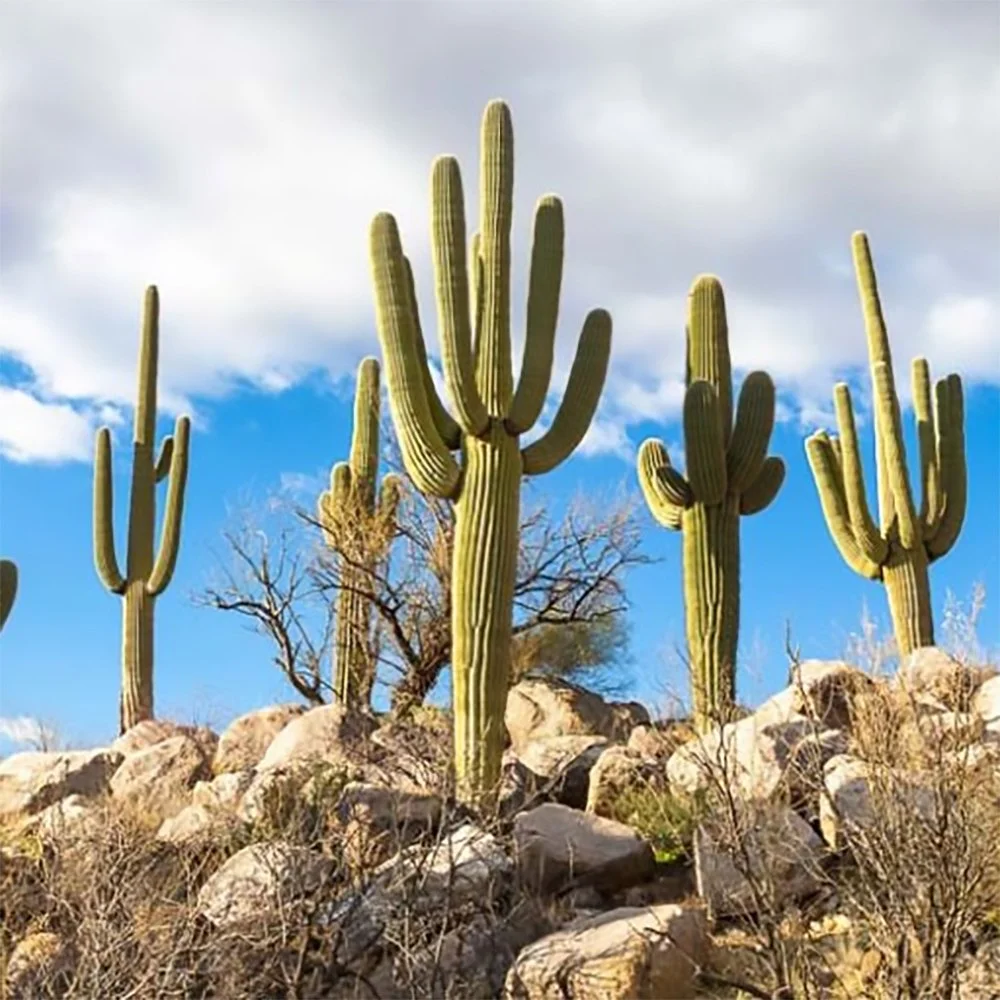
Carnegiea gigantea, commonly known as the Saguaro Cactus, is an iconic Sonoran Desert native recognized for its towering columnar form and distinctive upward-reaching arms. Native to the Sonoran Desert of Arizona, California, and northwestern Mexico, this long-lived, slow-growing cactus can eventually reach 40–50 feet tall, with some exceptional specimens living for more than 200 years. Saguaros thrive in warm temperatures around 70–110°F, full sun, and extremely well-draining soil and are highly drought-tolerant once established. Mature plants can tolerate brief freezes around 20–25°F, while young plants are much more sensitive and should be protected below 25°F. Water deeply but infrequently during active growth, allowing the soil to dry between waterings, and protect plants from prolonged freezing and excessive winter moisture. Mature saguaros produce spectacular white, night-blooming flowers that provide important food for desert wildlife and pollinators, followed by edible red fruit. A remarkable choice for desert landscapes, xeriscapes, and collectors of iconic Southwest plants.
Saguaros are protected under Arizona Native Plant Law, and wild plants cannot simply be removed or collected without the appropriate authorization. Nursery-grown plants should be legally propagated or obtained through permitted sources.
THESE PLANTS ARE SHIPPED AS BARE-ROOT SPECIMENS.
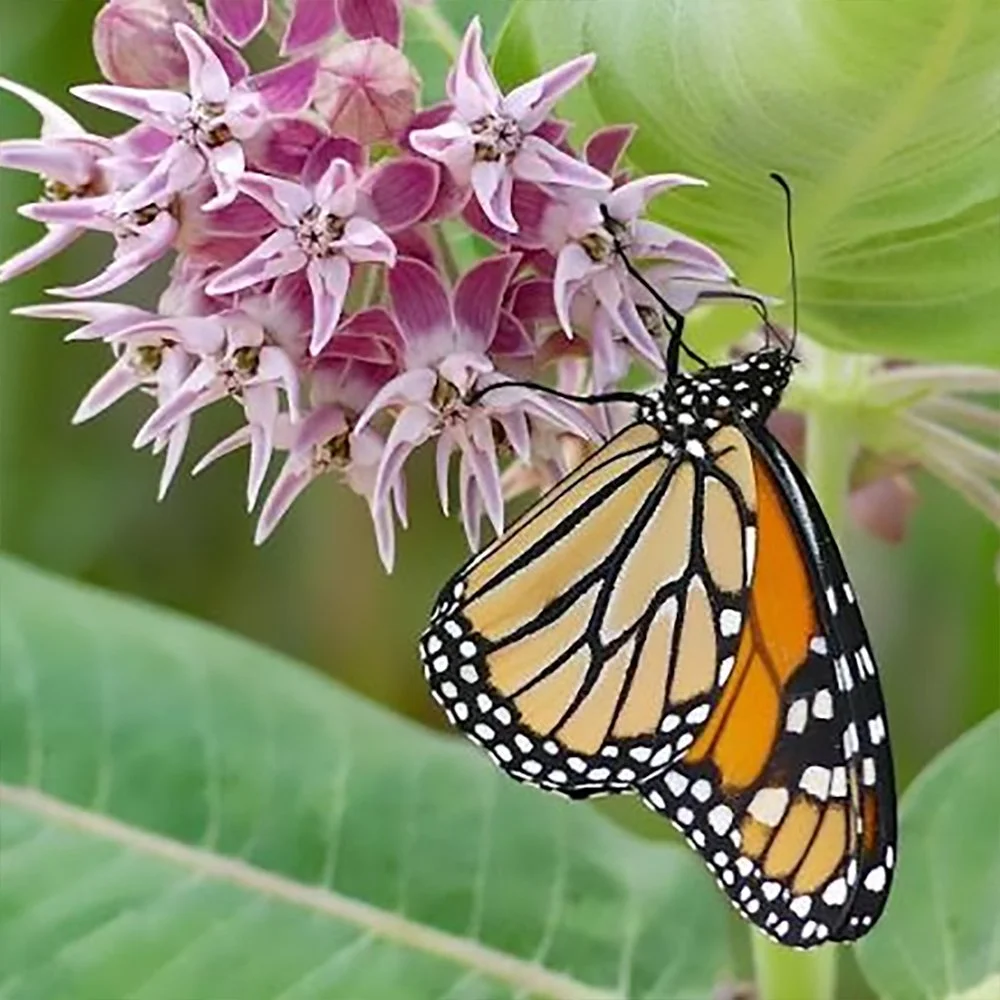
Showy Milkweed (Asclepias speciosa) is a striking Western native prized for its large, soft-green leaves and clusters of fragrant, star-shaped pink to rosy-purple flowers. Native to much of the western United States and parts of Canada, it is an excellent choice for native plant gardens, pollinator gardens, meadow plantings, and naturalized landscapes. Its showy blooms attract butterflies, bees, and other beneficial pollinators, while the foliage provides an important food source for monarch and other milkweed-associated caterpillars. Mature plants typically reach 2–5 feet tall and 1–3 feet wide. Best suited to USDA Zones 3–9, it thrives in full sun and well-draining soil and becomes increasingly drought-tolerant once established. Established plants can tolerate summer temperatures around 95–105°F and winter temperatures near -30 to -20°F, depending on local conditions. Water regularly during establishment, then reduce watering as plants become established.
Stratification & Germination: Showy Milkweed seeds often benefit from cold, moist stratification, which can help break dormancy and improve germination. For best results, place seeds in a lightly moistened medium and refrigerate them for approximately 30–60 days before sowing. After stratification, sow seeds on the surface of a well-draining seed-starting mix and press them gently into the soil rather than covering them deeply, as milkweed seeds need light to germinate. Keep the growing medium evenly moist but not waterlogged and provide bright light and warm conditions. Germination may be uneven and can take several weeks, so be patient and continue caring for the seed tray while additional seedlings emerge. Fresh seed generally produces the most reliable results, and seedlings should be transplanted carefully after they have developed several sets of true leaves.
THIS LISTING IS FOR A PACKET OF 25 SEEDS.
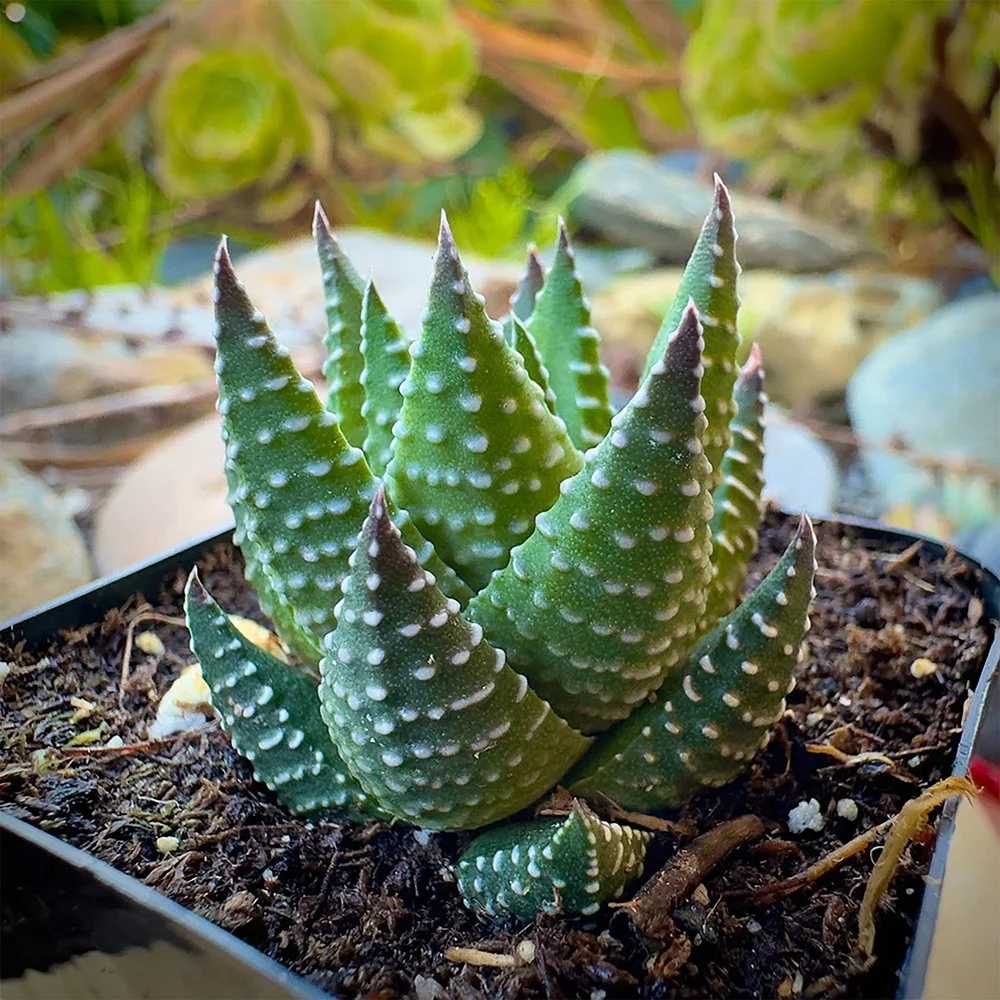
Tulista kingiana (formerly Haworthia kingiana) is commonly called King Tulista, King Haworthia, Pearl Plant, and Miniature Aloe. It is a rare, slow-growing South African succulent prized for its compact rosette of yellow-green, heavily tubercled leaves and distinctive collector appeal. A highly collectible species, Tulista kingiana is an endangered South African endemic found naturally in only a small area of the Western Cape. Its restricted distribution, slow growth, and limited wild populations make it a particularly desirable specialty succulent for collectors. Mature plants typically reach approximately 6–12 inches tall and 6–10 inches wide, making them excellent for containers, rock gardens, and specialty succulent collections. It performs best in 60–85°F temperatures and is generally suited to USDA Zones 9–11, tolerating brief cold near 25–30°F when kept dry, but it benefits from protection from prolonged freezing and winter moisture. Provide bright filtered light to partial sun, excellent drainage, and allow the soil to dry between waterings. Its sculptural form and unusual texture make it a standout specimen for collectors, while its slow growth and relative rarity add to its value as a specialty nursery offering.
THIS LISTING IS FOR A BARE-ROOT SPECIMEN, 1-3 INCHES TALL. Plant in well-draining soil and watch it grow!
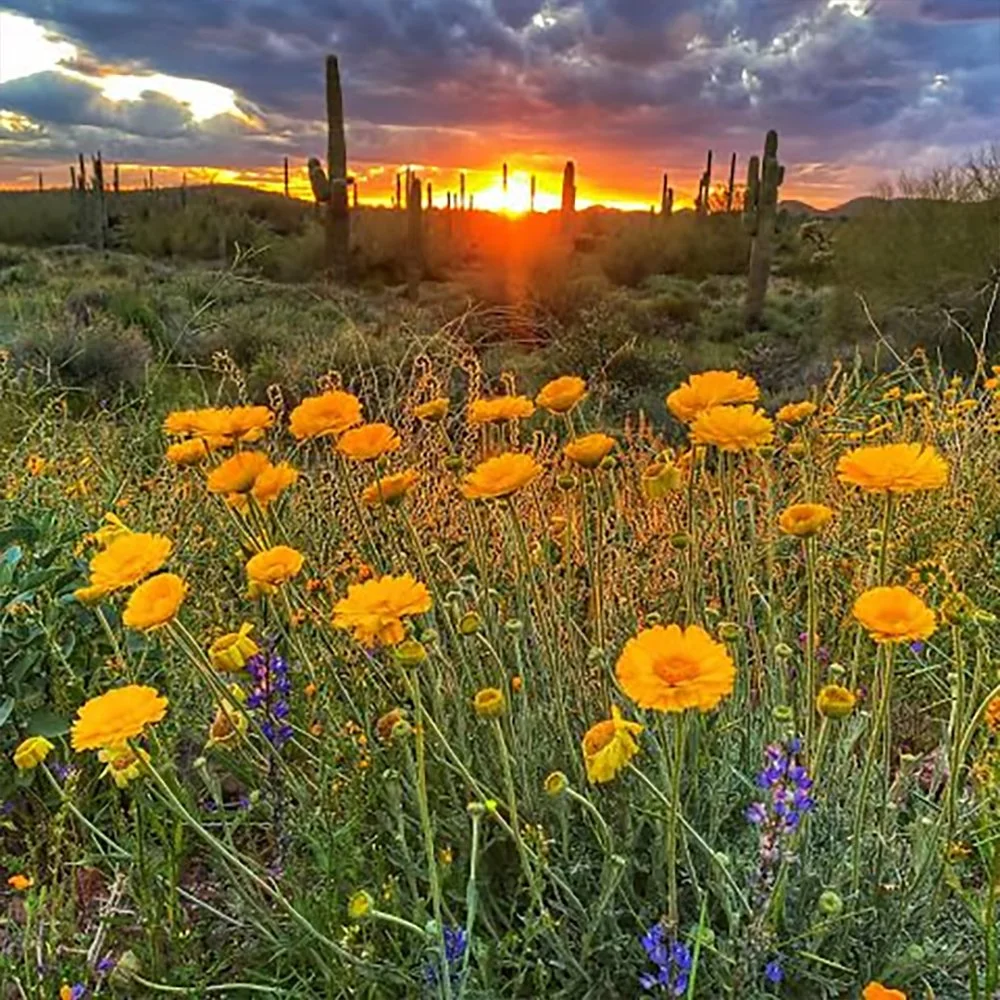
The climate in this region is characterized by extremely hot summers, mild winters with occasional frost, and two seasonal rainfall periods—winter rain and summer monsoons. Soils are often alkaline, sandy, or heavy caliche clay.
This seed mix contains over 3,000 seeds (1/10 oz.) and includes the following wildflowers suited specifically to this region:
Arizona Lupine (Lupinus arizonicus) — A native wildflower that produces tall spikes of bright purple to blue flowers and typically blooms in spring and thrives in dry, sandy, and rocky environments.
Chia (Salvia columbariae) — A hardy native annual with distinctive purple flower clusters that performs well in dry, sandy conditions.
Desert Globemallow (Sphaeralcea ambigua) — A durable, drought-tolerant perennial with beautiful apricot-colored flowers.
Desert Marigold (Baileya multiradiata) — A tough, silver-leaved perennial with cheerful yellow blooms and excellent drought tolerance.
Desert Milkweed (Asclepias subulata) — A native desert milkweed with slender, upright stems and clusters of pale flowers that is well-adapted to hot, dry conditions and an important host plant for monarch and queen butterfly caterpillars. No artificial cold stratification is required when sown under appropriate conditions.
Mexican Gold Poppy (Eschscholzia californica ssp. mexicana) — A beloved spring annual that can carpet the desert in brilliant yellow-orange blooms following winter rains.
Parry’s Penstemon (Penstemon parryi) — An early-spring bloomer with vibrant pink flower spikes that are especially attractive to hummingbirds.
Tips for Planting Wildflower Seeds in this Region
Plant in fall: Late fall is generally the ideal season for desert wildflowers, allowing seeds to take advantage of cooler temperatures and winter moisture before the intense summer heat arrives.
Choose full sun: Select an area receiving 6–8 hours of direct sunlight. Desert wildflowers are generally adapted to strong sunlight and can struggle in heavily shaded locations.
Prepare the soil lightly: Remove weeds and loosen the surface without heavily amending the soil. Many desert natives are adapted to sandy, rocky, alkaline, or caliche soils and do not require rich garden soil.
Clear competing vegetation: Remove existing weeds and grasses before sowing, particularly aggressive annuals that can compete with seedlings for limited moisture and nutrients.
Scatter seeds over the surface: Mix small seeds with sand or fine soil to help distribute them evenly over the planting area.
Do not bury seeds deeply: Most desert wildflower seeds should remain close to the soil surface. Gently press or rake them into the soil to provide good seed-to-soil contact without covering them deeply.
Take advantage of winter conditions: Cool temperatures, winter rainfall, and natural fluctuations between wet and dry conditions help many desert-adapted species germinate and establish.
Protect the seedbed: Avoid heavy foot traffic or disturbing the soil after sowing, particularly once seedlings begin emerging.
Watch for rapid warming: Low-desert temperatures can rise quickly in late winter and spring. Young seedlings may have only a short window to develop before extreme heat and increasing evaporation arrive.
Expect different germination rates: Native wildflowers do not necessarily emerge at the same time. Some species may germinate quickly, while others remain dormant until environmental conditions are favorable.
Avoid overwatering: Desert wildflowers are adapted to seasonal moisture followed by drying conditions. Excessive irrigation can encourage weak, overly lush growth and increase the risk of disease or root problems.
Choose locally adapted species: Whenever possible, select wildflowers native to your specific desert, elevation, soil type, and rainfall pattern. A species that performs well in one low-desert location may not be equally suited to another.
At Desert Roots Nursery, we’re here to help you choose plants and seeds that are suited to your corner of the Southwest—so you can spend less time fighting the climate and more time enjoying the blooms.
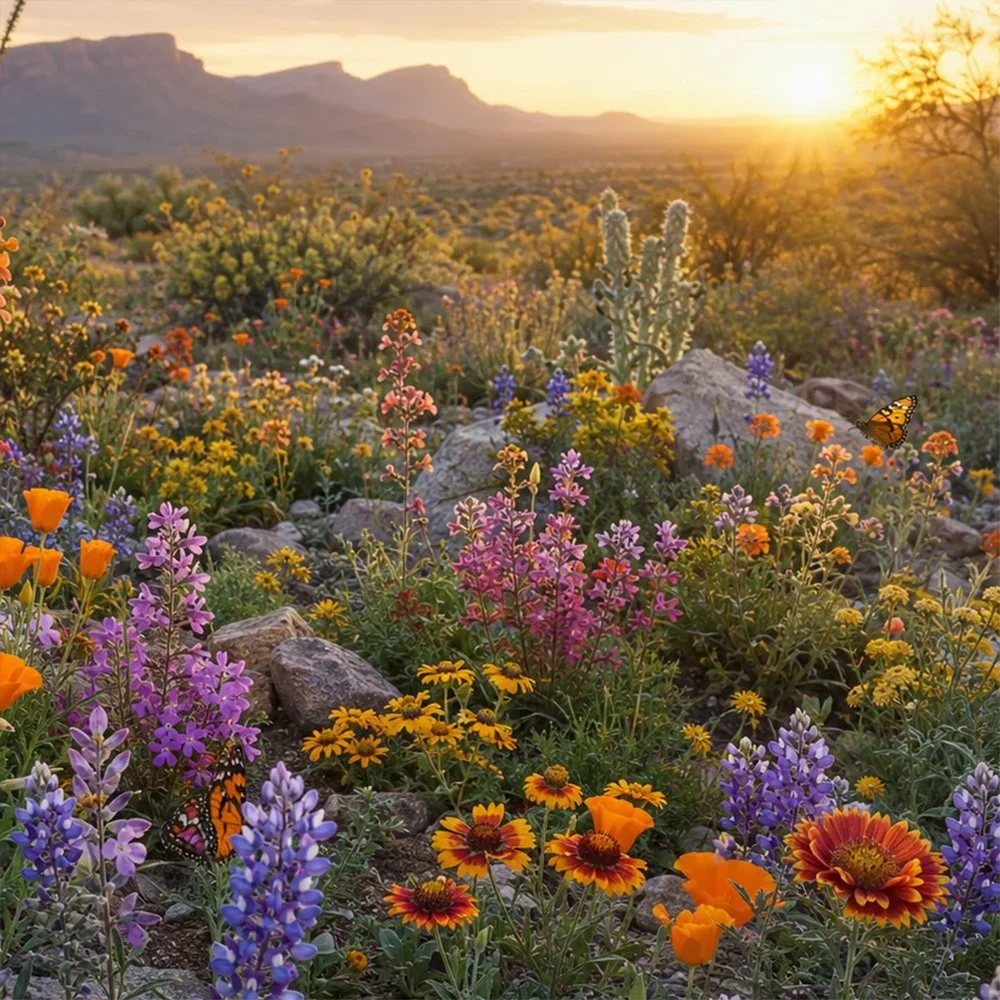
The climate in this region is characterized by hot, dry summers and cold winters with greater temperature swings, seasonal winter precipitation or snow, and a shorter growing season than the low desert.
This seed mix contains over 2,560 seeds (1/10 oz.) and includes the following wildflowers suited specifically to this region:
Antelope Horns Milkweed (Asclepias asperula) — A hardy native adapted to hot, dry conditions, intense sun, and rocky or sandy soils, producing clusters of greenish-yellow flowers with maroon to purple accents that attract monarchs and other pollinators.
Arroyo Lupine (Lupinus succulentus) — A robust native annual producing deep purple-blue flower spikes that thrives in heavier foothill clay soils and provides valuable forage for local pollinators.
Bird’s Eyes (Gilia tricolor) — A delicate-looking but resilient native annual featuring fragrant purple, white, and yellow blooms that brings airy texture to water-wise garden borders.
Desert Bluebells (Phacelia campanularia) — A fast-growing, drought-tolerant annual known for delivering intense, electric-blue color early in the spring season.
Firewheel / Blanket Flower (Gaillardia pulchella) — A colorful, highly heat-tolerant wildflower with vibrant red-and-yellow blooms that performs exceptionally well in poor or challenging soils.
Palmer’s Penstemon (Penstemon palmeri) — A striking, tall perennial with fragrant, pale-pink flowers that thrives effortlessly in rocky, gravelly foothill soils.
Purple Prairie Clover (Dalea purpurea) — A deep-rooted native perennial with distinctive purple flower heads that acts as an excellent soil binder while naturally fixing nitrogen in poor terrain.
Tips for Planting Wildflower Seeds in this Region
Plant in late fall through winter: Sowing during the colder months allows seeds to experience natural temperature fluctuations, winter moisture, and, for some species, cold stratification.
Choose a sunny location: Most native wildflowers thrive with 6–8 hours of direct sunlight, although some woodland or riparian species prefer partial shade.
Work with your native soil: Avoid heavily enriching the soil. Many high-desert wildflowers are adapted to rocky, sandy, alkaline, or low-organic-matter soils.
Remove competing vegetation: Clear existing weeds and grasses before sowing so young seedlings have access to sunlight, moisture, and nutrients.
Scatter seeds evenly: Mix very small seeds with dry sand or fine soil to make them easier to distribute evenly across the planting area.
Press, don't bury: Gently press seeds into the soil for good seed-to-soil contact, but avoid deep planting—many native wildflower seeds need to remain near the surface.
Use natural winter moisture: Snow, rain, and seasonal precipitation can provide the moisture needed to initiate germination as temperatures begin to rise.
Expect variable germination: Native species have different dormancy requirements, so some may emerge quickly while others take several months or even more than one growing season.
Watch spring conditions: Spring can bring rapid shifts from cool, moist weather to hot, dry, windy conditions, so newly emerging seedlings should not be allowed to remain completely dry for extended periods.
Give plants room to establish: Avoid dense seeding or frequent disturbance; established native plants generally become more resilient to the region's heat and drought.
Match species to elevation: This is a broad transition region, so select wildflowers appropriate for your specific elevation, winter temperatures, soil type, and moisture conditions.
At Desert Roots Nursery, we’re here to help you choose plants and seeds that are suited to your corner of the Southwest—so you can spend less time fighting the climate and more time enjoying the blooms.
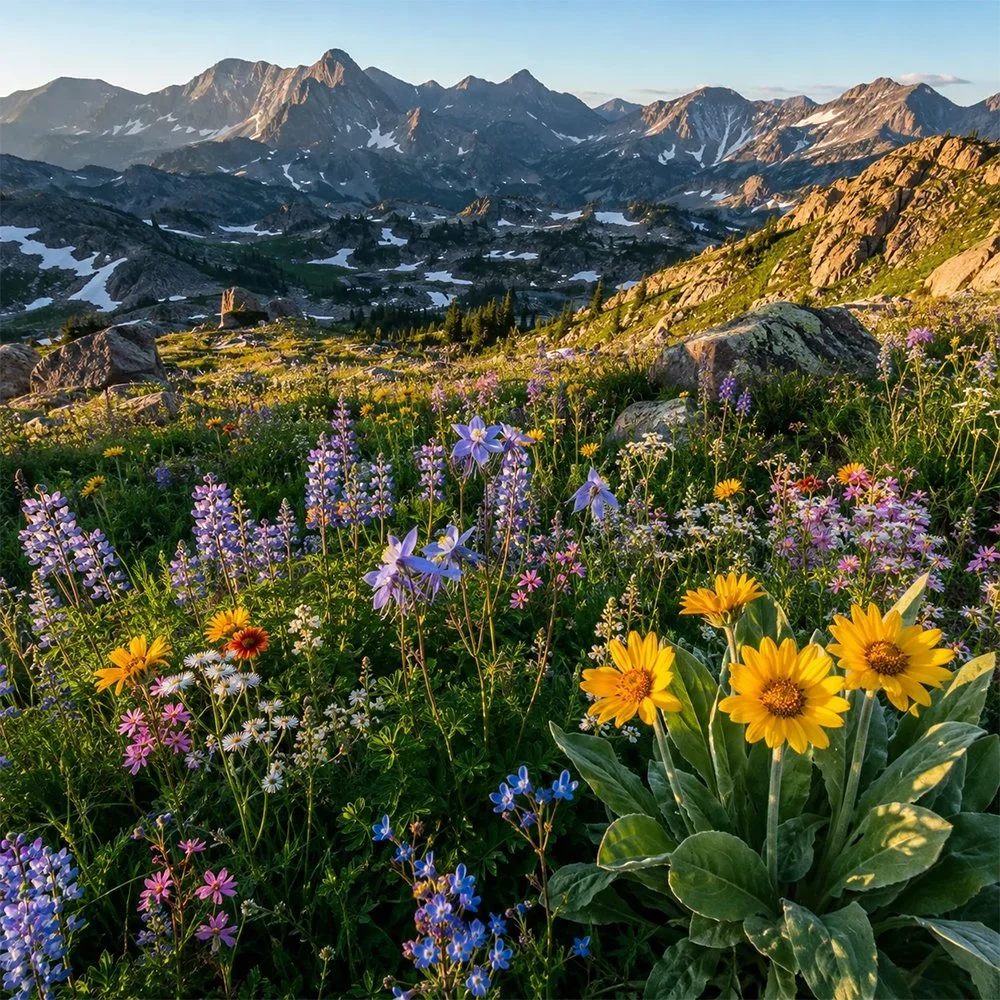
The climate in this region is characterized by cold, snowy winters, cool summers, late spring frosts, large day-to-night temperature swings, and a short growing season.
This seed mix contains over 4,800 seeds (1/10 oz.) and includes the following wildflowers suited specifically to this region:
Black-Eyed Susan (Rudbeckia hirta) — An adaptable wildflower that benefits from natural winter freezing under the snowpack to trigger robust spring germination.
Blanket Flower (Gaillardia aristata) — A rugged, cold-hardy perennial that adds long-lasting red and gold color to open mountain meadows.
Blue Flax (Linum lewisii) — A cold-hardy perennial that produces masses of delicate, sky-blue flowers that open each morning throughout the growing season.
Rocky Mountain Columbine (Aquilegia caerulea) — A classic mountain wildflower with striking blue-and-white petals that is perfectly suited to cool, high-elevation pine environments.
Showy Milkweed (Asclepias speciosa) — A robust perennial with spherical pink flower clusters that provides critical habitat and food for monarch butterflies.
Silvery Lupine (Lupinus argenteus) — A native mountain perennial featuring shimmering, silver-green foliage and dense spikes of purple-blue flowers that naturally enriches poor soil with nitrogen.
Western Yarrow (Achillea millefolium var. occidentalis) — A rugged native perennial with feathery foliage and flat-topped white flower clusters that thrives in rocky soils and attracts native bees.
Tips for Planting Wildflower Seeds in this Region
Plant around the natural freeze cycle: Sow in late fall just before the ground freezes, allowing seeds to remain dormant through winter and germinate naturally in spring.
Choose a sunny site: Most native wildflowers perform best with 6–8 hours of direct sunlight.
Prepare the soil lightly: Remove weeds and competing vegetation, but avoid heavily amending native soils. Many regional wildflowers are adapted to lean, rocky, or well-drained soils.
Press seeds into the soil: Scatter seeds over the prepared surface and gently press them into contact with the soil. Do not bury them deeply; many wildflower seeds require light to germinate.
Let winter do the work: Snow, freezing temperatures, and natural moisture provide important seasonal conditions for many native species and can help break seed dormancy.
Protect the seedbed: Avoid disturbing the area after sowing, especially through winter and early spring.
Watch moisture in spring: As snow melts and temperatures rise, keep an eye on newly emerging seedlings, particularly during unusually dry periods.
Expect uneven germination: Native wildflowers often germinate at different times, and some species may require more than one season to establish.
Be patient: In this region, the short growing season and cold temperatures mean wildflowers may establish more slowly than plants grown in warmer climates.
At Desert Roots Nursery, we’re here to help you choose plants and seeds that are suited to your corner of the Southwest—so you can spend less time fighting the climate and more time enjoying the blooms.
Antelope Horns Milkweed (Asclepias asperula) is a distinctive Southwestern native prized for its narrow, upright foliage and unusual clusters of greenish-yellow flowers accented with maroon to purple tones. Native across much of the central and southwestern United States, it is an excellent choice for dry Western landscapes, native plant gardens, pollinator gardens, xeriscapes, and wildlife habitats within its natural range. The plant gets its common name from its long, curved seed pods, which resemble the horns of an antelope. Mature plants typically reach 1–3 feet tall and 1–2 feet wide, forming an attractive, spreading to upright clump. Best suited to USDA Zones 6–10, it thrives in full sun and well-draining soil and is highly adapted to hot, dry conditions once established. Established plants can tolerate summer temperatures around 95–110°F and cold temperatures near -10 to 0°F, depending on conditions and local ecotype. In colder climates, the plant may die back to the ground during winter and regrow from its root system in spring. Water regularly while establishing, then gradually reduce watering as plants become established.
Stratification & Germination: Asclepias asperula seeds can benefit from cold, moist stratification, which helps overcome dormancy and may improve germination. For best results, place seeds in a lightly moistened medium and refrigerate them for approximately 30 days before sowing. After stratification, sow the seeds on the surface of a well-draining seed-starting mix and press them gently into the soil rather than covering them deeply, as milkweed seeds need light to germinate. Keep the medium evenly moist but not saturated and provide warmth and bright light. Germination may be somewhat irregular, so allow several weeks for seedlings to emerge and avoid discarding seed trays too early. Fresh seed generally provides the best germination, and seedlings should be transplanted carefully once they are well established.
Milkweed contains toxic cardiac glycosides and should be kept away from pets, livestock, and children.
THIS LISTING IS FOR A PACKET OF 25 SEEDS.