
A Little Winter Before Spring: Seed Stratification for Wildflowers
Growing wildflowers from seed begins with understanding the conditions that help each species wake up. Some seeds germinate readily with moisture and suitable temperatures. Others remain dormant until they experience a period of winter-like conditions. For these seeds, a treatment called stratification can improve germination and make seed starting more successful.
What Is Seed Stratification?
Seed stratification exposes seeds to moisture and specific temperatures for a set period to help overcome dormancy. It mimics the seasonal conditions seeds experience in nature before germinating.
Cold, moist stratification simulates winter by keeping seeds in moist conditions at approximately 33–41°F. Butterfly Milkweed (Asclepias tuberosa), a North American native, often benefits from about 30 days of this treatment.
Warm, moist stratification keeps seeds moist at warmer temperatures, helping embryos develop or overcomin certain forms of dormancy. Wild Ginger (Asarum canadense), a native woodland wildflower, provides an example of a warm treatment stage, which is followed by chilling.
Sequential stratification combines warm and cold periods in a prescribed order. Bloodroot (Sanguinaria canadensis), another North American woodland wildflower, illustrates this approach: its seed preparation can involve warm, cold, and then warm conditions.
These treatments can overlap—warm stratification is often one stage of a longer sequence. Moisture is essential, so refrigerating dry seeds does not provide cold, moist stratification. Keep the treatment material damp rather than soggy, and check the seed instructions for the exact temperatures, duration, and sequence.
Why Wildflower Seeds Have Different Needs
Wildflowers grow in habitats ranging from deserts and grasslands to woodlands and mountain meadows. Their germination requirements reflect the seasonal conditions in which they naturally grow. Seeds from plants adapted to cold winters may need different preparation from those native to mild climates. Fall planting can help gardeners work with these seasonal conditions. However, sowing in fall does not automatically provide every treatment a seed needs. Seeds that need a warm period before chilling must be planted early enough to experience both stages, while seeds that need only cold, moist conditions may be suitable for later sowing. In areas with mild winters, outdoor conditions may not provide enough chilling. Refrigerator treatment offers more control over temperature, moisture, and timing.
Which Wildflowers Benefit?
Some wildflowers benefit from stratification, while others germinate readily without it. Requirements vary by species, seed source, and seed lot, so check the seed instructions before beginning treatment. Milkweed seeds also differ in their need for chilling. Follow the instructions for the particular milkweed you are growing rather than assuming all milkweeds need the same preparation. For wildflower seed mixes, follow the instructions provided for the complete mix. A treatment that improves germination for one component may be unnecessary or unsuitable for another.
Letting Winter Do the Work
Where winters provide adequate chilling, outdoor sowing can allow nature to stratify seeds. Use a prepared, weed-free bed or containers with drainage, and follow the sowing-depth instructions. Protect the seedbed from disturbance and monitor moisture during dry weather. A few cold nights do not necessarily replace weeks of cold, moist treatment. Conditions where the seeds rest—including daytime temperatures and how quickly the soil dries—determine whether outdoor sowing provides suitable preparation. Keep containers labeled and give seeds time. Some native wildflowers germinate unevenly or require more than one season before seedlings appear.
Stratification and Scarification Are Different
Stratification exposes seeds to moisture and temperature conditions that help overcome dormancy. Scarification weakens a hard seed coat so water can enter. Depending on the plant, recommended methods may include careful abrasion or another specific treatment. Some seeds benefit from both scarification and stratification, while others need neither. Check the seed instructions for the appropriate method and order. Avoid sanding, nicking, or applying hot water unless the instructions recommend it, because unsuitable treatment can damage seeds.
Give Your Wildflowers a Good Start
Successful germination is only the beginning. Young plants need suitable light, moisture, drainage, and protection while they establish. Keep the growing medium appropriately moist without leaving it waterlogged, and gradually acclimate indoor-grown seedlings to outdoor conditions. Choose wildflowers suited to your climate and garden, check the seed instructions, and give each plant the preparation it needs. Explore Desert Cottage Nursery’s wildflower seed selection to bring seasonal color, natural beauty, and pollinator habitat to your garden.
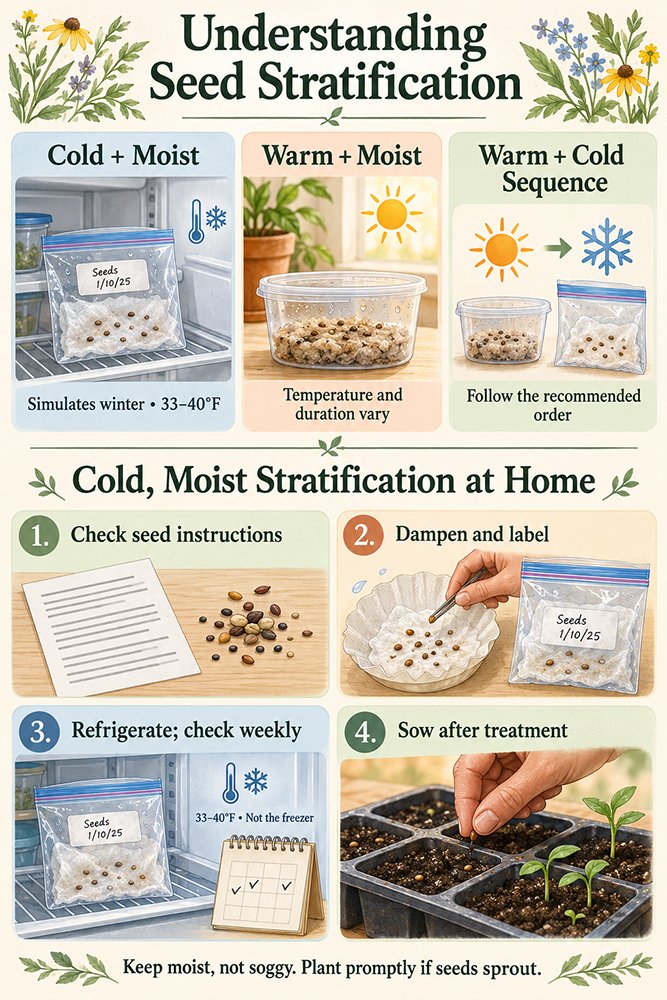
Instructions for Cold, Moist Stratification
Cold, moist stratification is a treatment gardeners can perform at home with a few simple supplies. Plan backward from a suitable planting date for your climate. Allow time for treatment, germination, and seedling growth so young plants can establish under favorable conditions.
Check the seed instructions for the recommended chilling period and any additional preparation.
Lightly dampen a clean paper towel, coffee filter, or suitable horticultural medium. It should feel moist without dripping or releasing water when squeezed.
Place the seeds in the damp material, then put it inside a resealable bag or covered container. Keep different species separate.
Label each container with the botanical name, treatment start date, and planned sowing date.
Refrigerate at approximately 33–40°F. Use the refrigerator rather than the freezer.
Check weekly for drying, mold, and early sprouting. If seeds sprout, plant them promptly and handle their delicate roots gently.
After the recommended treatment, sow at the depth specified in the seed instructions. Some tiny seeds need light and should remain on the soil surface.