
 Image 1 of 3
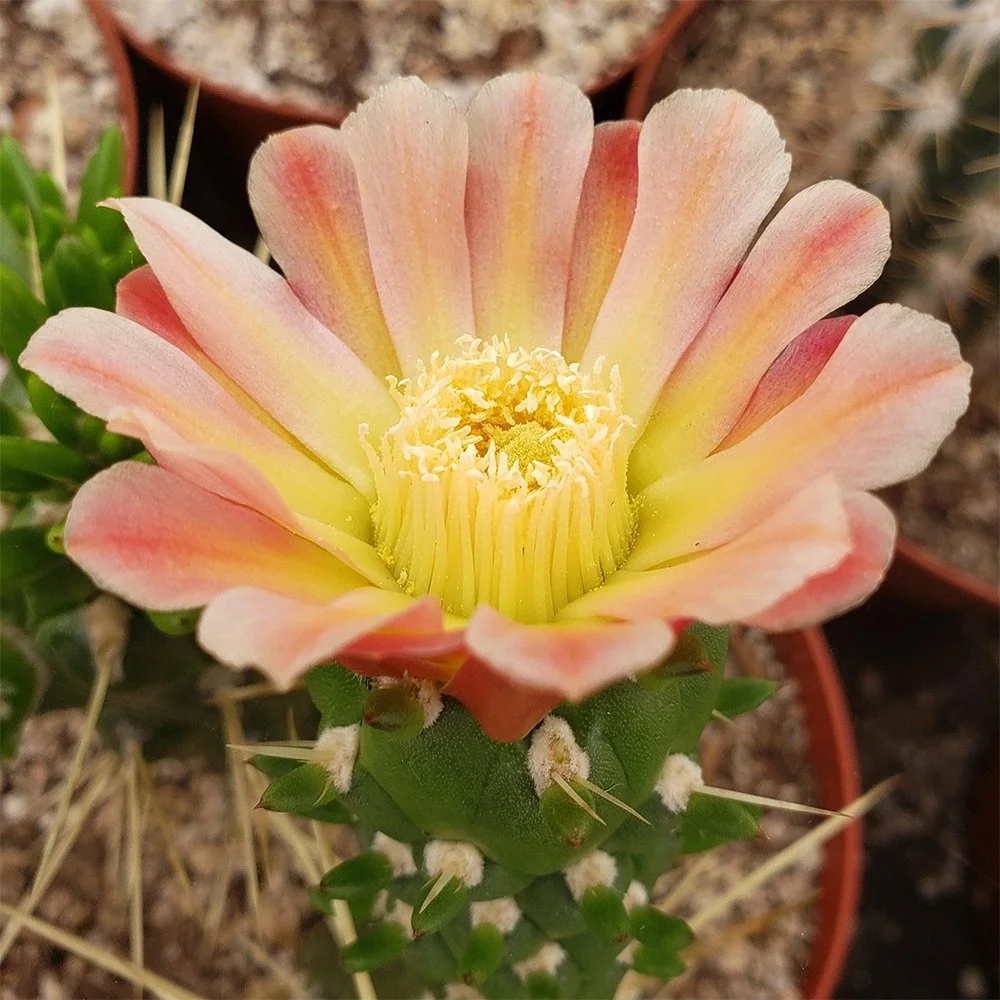 Image 2 of 3
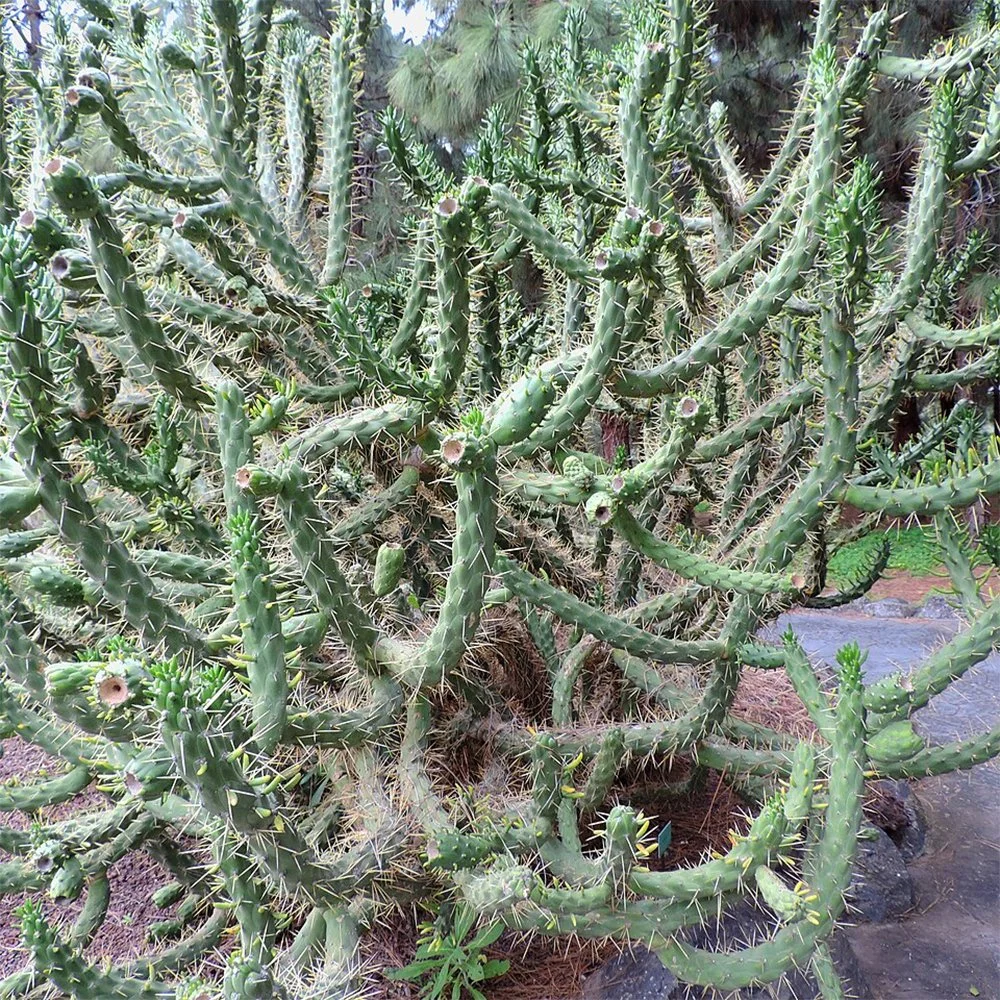 Image 3 of 3
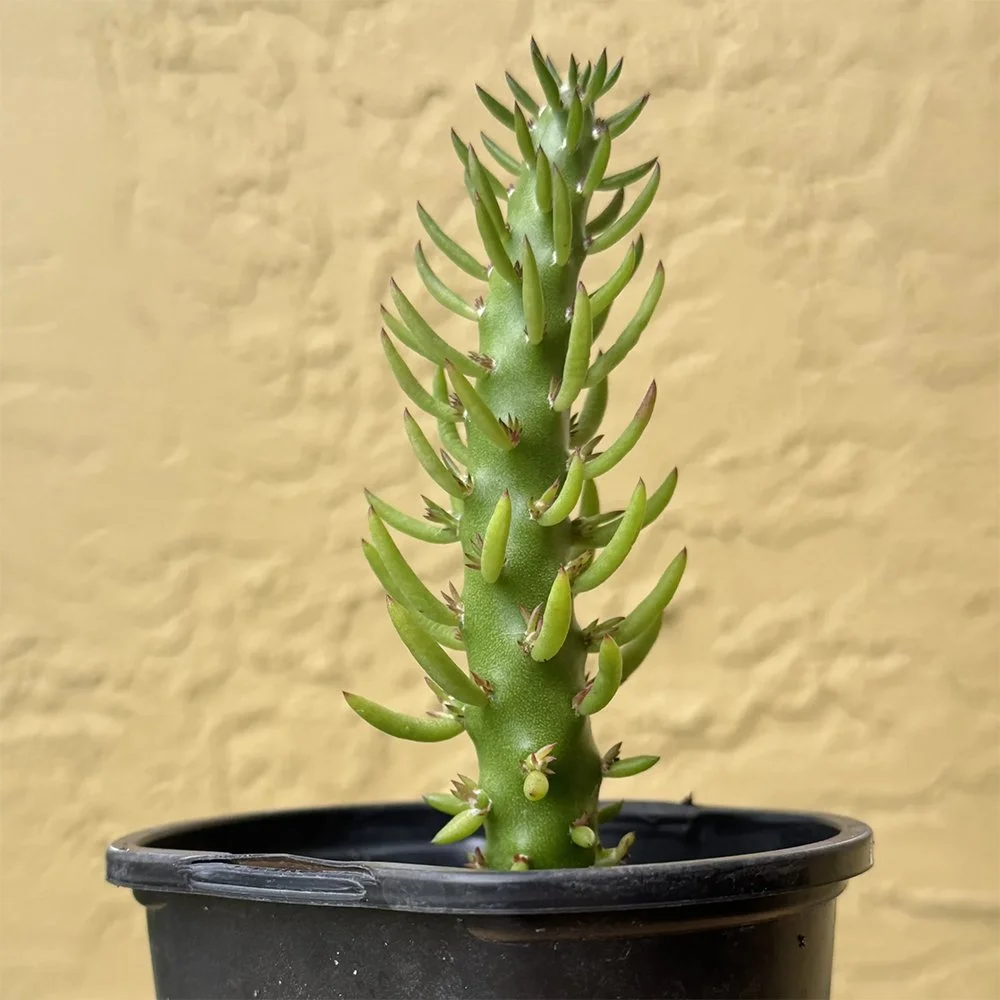
Austrocylindropuntia subulata, commonly known as Eve's Needle Cactus, Eve's Pin Cactus, or Long Spine Cactus, is a distinctive, fast-growing cactus native to Peru's Andean regions. Its upright, cylindrical green stems develop elongated, fleshy, awl-shaped leaves and prominent spines, giving the plant an unusual appearance unlike most traditional cacti. As it matures, the stems become woody and branch freely, forming a large, tree-like or shrubby silhouette.
In its native habitat, Eve's Needle Cactus can reach 10–13 feet tall and 6–10 feet wide, although container-grown specimens generally remain much smaller. Mature plants may produce reddish-orange to pinkish flowers, followed by small fruits, although flowering is uncommon in cultivation. Its unusual foliage and upright growth habit make it an interesting addition to cactus collections, large containers, and frost-free xeriscape gardens.
Eve's Needle Cactus thrives in full sun to partial shade and requires well-draining, sandy or gritty soil. Water deeply but infrequently, allowing the soil to dry thoroughly between waterings. Reduce watering significantly during winter, particularly when temperatures are cool. Established plants tolerate summer temperatures above 100°F with proper acclimation, although container-grown plants benefit from afternoon shade during extreme desert heat.
Best suited to USDA Zones 9b–11, Eve's Needle Cactus tolerates brief temperatures around 25–30°F when kept dry, but prolonged freezing conditions can damage its fleshy stems and leaves. Protect young plants from frost and avoid planting in areas where water collects during winter.
Eve's Needle Cactus is not generally considered chemically toxic to people or pets. However, its sharp spines can cause painful puncture wounds and physical injury. Handle carefully and position plants away from walkways, children, and pets.
Eve's Needle Cactus is easy to propagate from stem cuttings. Remove a healthy stem segment with protective gloves, let the cut end dry and callus for several days, then plant it in dry, well-draining cactus soil. Water sparingly until roots develop. Propagation from seed is also possible but generally slower.
Austrocylindropuntia subulata, commonly known as Eve's Needle Cactus, Eve's Pin Cactus, or Long Spine Cactus, is a distinctive, fast-growing cactus native to Peru's Andean regions. Its upright, cylindrical green stems develop elongated, fleshy, awl-shaped leaves and prominent spines, giving the plant an unusual appearance unlike most traditional cacti. As it matures, the stems become woody and branch freely, forming a large, tree-like or shrubby silhouette.
In its native habitat, Eve's Needle Cactus can reach 10–13 feet tall and 6–10 feet wide, although container-grown specimens generally remain much smaller. Mature plants may produce reddish-orange to pinkish flowers, followed by small fruits, although flowering is uncommon in cultivation. Its unusual foliage and upright growth habit make it an interesting addition to cactus collections, large containers, and frost-free xeriscape gardens.
Eve's Needle Cactus thrives in full sun to partial shade and requires well-draining, sandy or gritty soil. Water deeply but infrequently, allowing the soil to dry thoroughly between waterings. Reduce watering significantly during winter, particularly when temperatures are cool. Established plants tolerate summer temperatures above 100°F with proper acclimation, although container-grown plants benefit from afternoon shade during extreme desert heat.
Best suited to USDA Zones 9b–11, Eve's Needle Cactus tolerates brief temperatures around 25–30°F when kept dry, but prolonged freezing conditions can damage its fleshy stems and leaves. Protect young plants from frost and avoid planting in areas where water collects during winter.
Eve's Needle Cactus is not generally considered chemically toxic to people or pets. However, its sharp spines can cause painful puncture wounds and physical injury. Handle carefully and position plants away from walkways, children, and pets.
Eve's Needle Cactus is easy to propagate from stem cuttings. Remove a healthy stem segment with protective gloves, let the cut end dry and callus for several days, then plant it in dry, well-draining cactus soil. Water sparingly until roots develop. Propagation from seed is also possible but generally slower.