
 Image 1 of 2
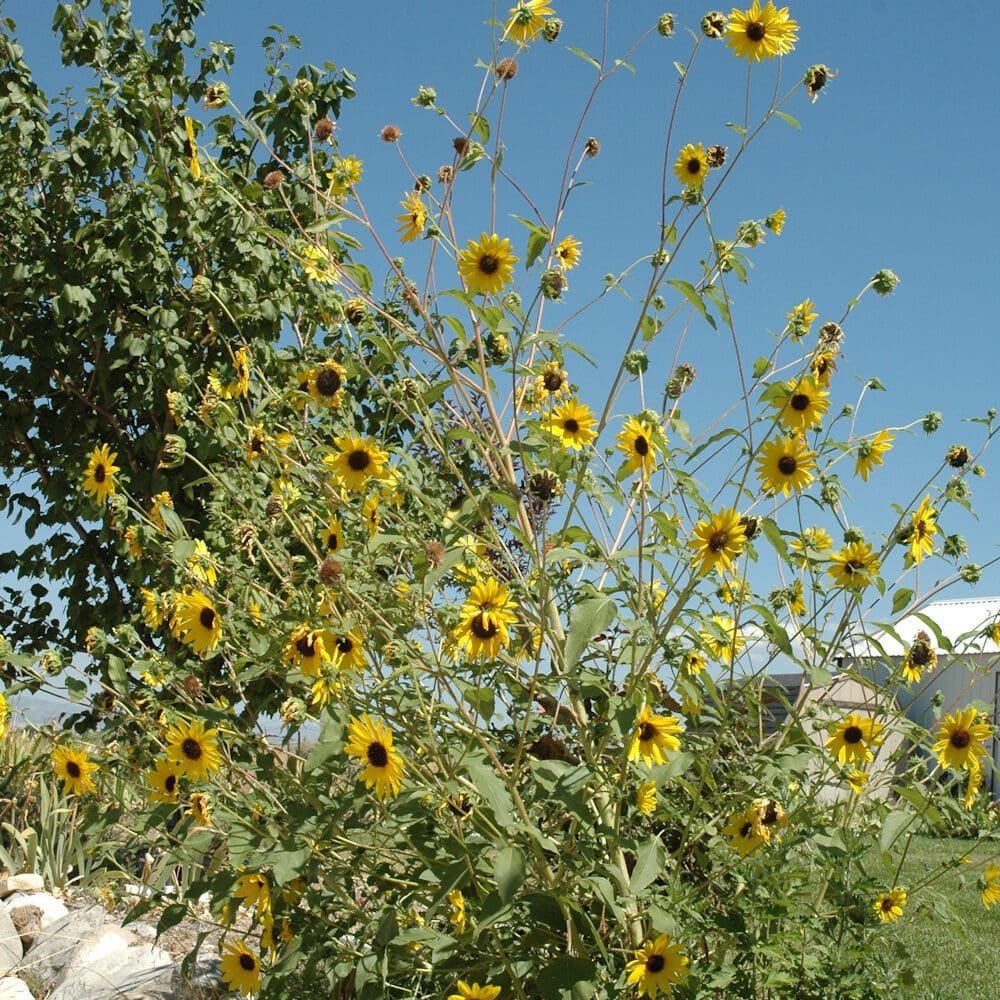 Image 2 of 2
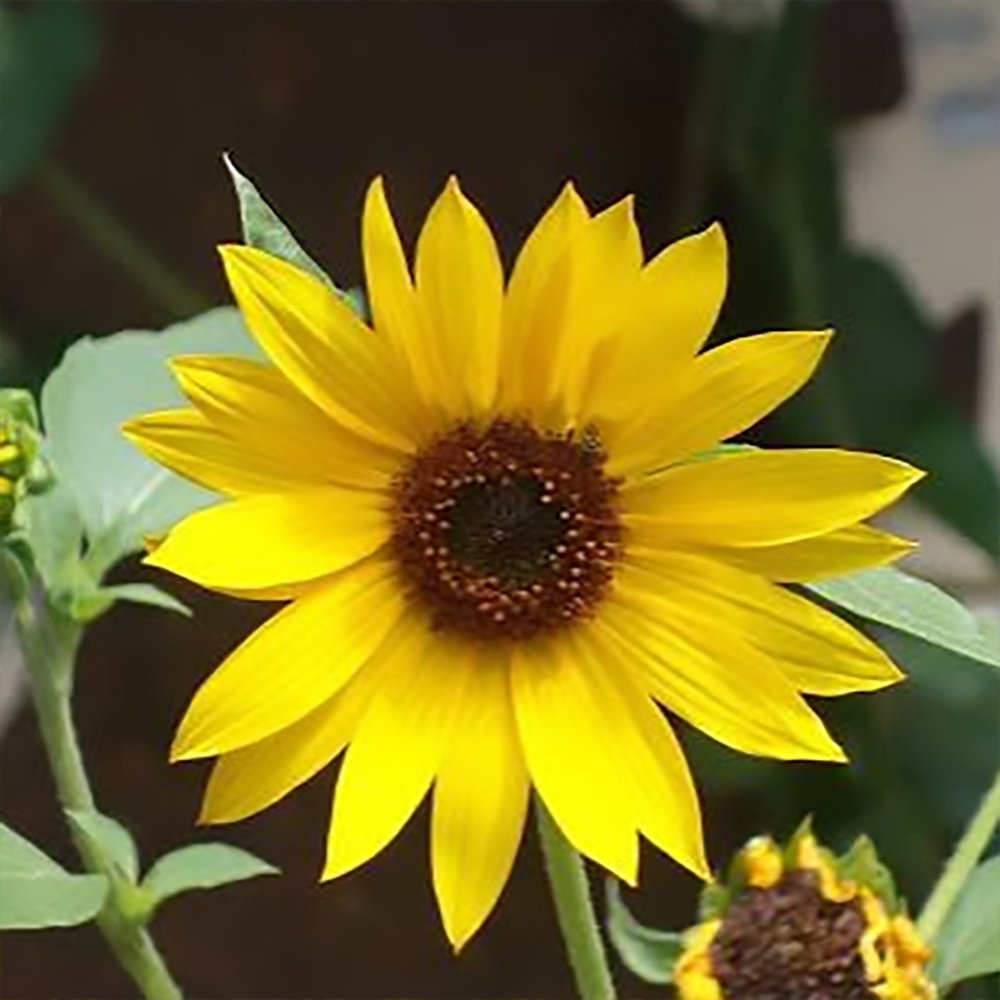
Helianthus annuus, commonly known as Common Sunflower or Annual Sunflower, is a fast-growing annual wildflower native to much of North America, including the southwestern United States. Known for its cheerful, golden-yellow flowers with prominent dark centers, this iconic wildflower brings brilliant summer color to native gardens, pollinator habitats, and naturalized landscapes. Plants typically reach 3–10 feet tall and 1–3 feet wide, depending on growing conditions and variety. Large flower heads bloom from summer into fall, attracting native bees, butterflies, and other beneficial pollinators. As the seeds mature, they provide a valuable food source for finches, sparrows, and other seed-eating birds.
Helianthus annuus thrives in full sun and well-draining soil, including sandy, loamy, and moderately alkaline soils. Once established, it tolerates drought and summer temperatures of 100–110°F when sufficient soil moisture is available, although prolonged extreme heat and dryness can reduce flowering. Best grown during the warm season, sunflowers prefer daytime temperatures of 70–85°F for vigorous growth. Young plants are sensitive to frost, generally suffering damage at temperatures below 32°F. Suitable for USDA Zones 2–11 as a warm-season annual, this adaptable species grows readily from seed and develops a deep taproot that helps it access moisture.
In the low deserts of Arizona and the Southwest, sow seeds in late winter through early spring after frost danger has passed, or during the summer monsoon season when adequate moisture is available. In cooler high-desert and mountain regions, plant in spring after the last frost. Sow seeds approximately ½–1 inch deep directly into prepared soil, keeping the seedbed lightly moist until germination, usually within 7–14 days. Once established, water deeply but less frequently to encourage strong root development.
With its brilliant flowers, abundant pollen, and nutritious seeds, Common Sunflower is an excellent choice for wildlife gardens, pollinator plantings, and colorful seasonal displays. Grow this beloved North American native to bring vibrant color and support beneficial wildlife throughout the growing season.
Please Note: This is the wild form of Sunflower (Helianthus annuus), not the giant cultivated sunflower varieties commonly grown for oversized blooms and large edible seeds. Wild sunflowers typically produce smaller, more numerous flowers on branching stems, creating a natural display that attracts bees, butterflies, and seed-eating birds.
THIS LISTING IS FOR A PACK OF APPROX. 360 SEEDS (1/10 OZ.)
Helianthus annuus, commonly known as Common Sunflower or Annual Sunflower, is a fast-growing annual wildflower native to much of North America, including the southwestern United States. Known for its cheerful, golden-yellow flowers with prominent dark centers, this iconic wildflower brings brilliant summer color to native gardens, pollinator habitats, and naturalized landscapes. Plants typically reach 3–10 feet tall and 1–3 feet wide, depending on growing conditions and variety. Large flower heads bloom from summer into fall, attracting native bees, butterflies, and other beneficial pollinators. As the seeds mature, they provide a valuable food source for finches, sparrows, and other seed-eating birds.
Helianthus annuus thrives in full sun and well-draining soil, including sandy, loamy, and moderately alkaline soils. Once established, it tolerates drought and summer temperatures of 100–110°F when sufficient soil moisture is available, although prolonged extreme heat and dryness can reduce flowering. Best grown during the warm season, sunflowers prefer daytime temperatures of 70–85°F for vigorous growth. Young plants are sensitive to frost, generally suffering damage at temperatures below 32°F. Suitable for USDA Zones 2–11 as a warm-season annual, this adaptable species grows readily from seed and develops a deep taproot that helps it access moisture.
In the low deserts of Arizona and the Southwest, sow seeds in late winter through early spring after frost danger has passed, or during the summer monsoon season when adequate moisture is available. In cooler high-desert and mountain regions, plant in spring after the last frost. Sow seeds approximately ½–1 inch deep directly into prepared soil, keeping the seedbed lightly moist until germination, usually within 7–14 days. Once established, water deeply but less frequently to encourage strong root development.
With its brilliant flowers, abundant pollen, and nutritious seeds, Common Sunflower is an excellent choice for wildlife gardens, pollinator plantings, and colorful seasonal displays. Grow this beloved North American native to bring vibrant color and support beneficial wildlife throughout the growing season.
Please Note: This is the wild form of Sunflower (Helianthus annuus), not the giant cultivated sunflower varieties commonly grown for oversized blooms and large edible seeds. Wild sunflowers typically produce smaller, more numerous flowers on branching stems, creating a natural display that attracts bees, butterflies, and seed-eating birds.
THIS LISTING IS FOR A PACK OF APPROX. 360 SEEDS (1/10 OZ.)