
 Image 1 of 2
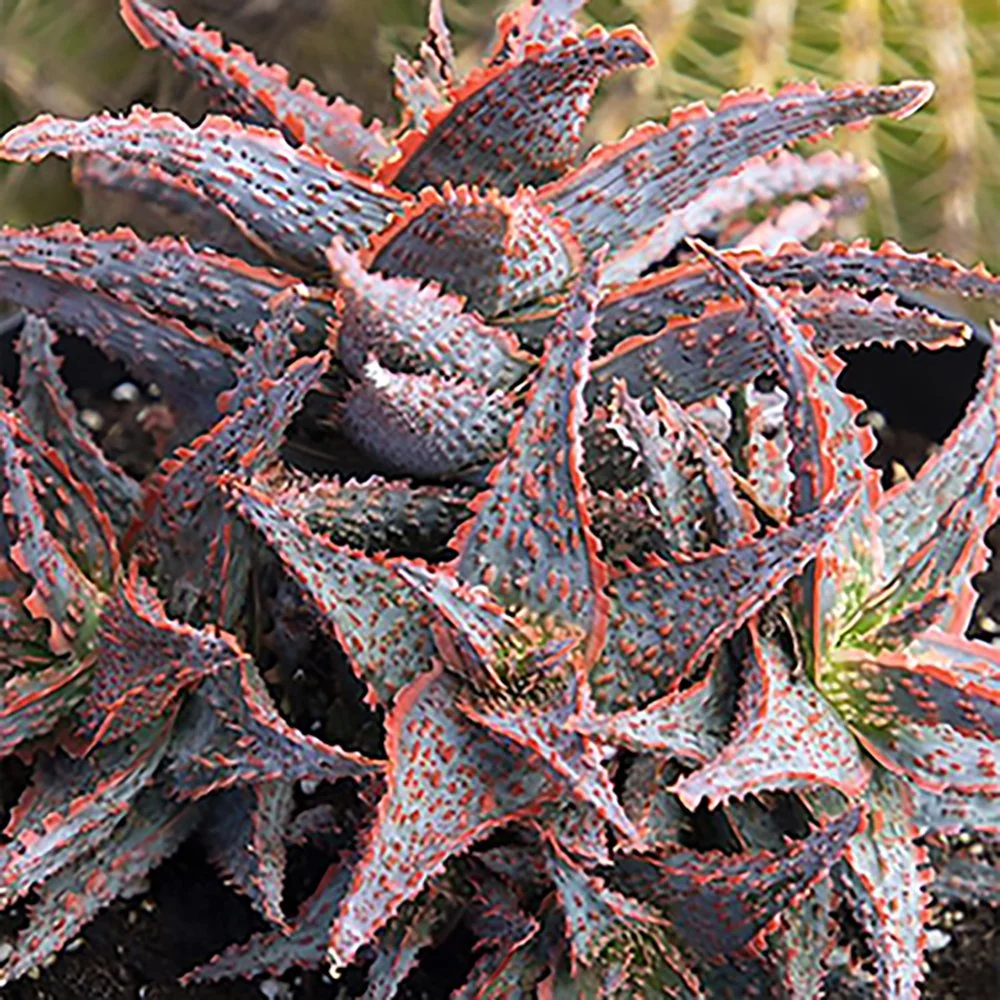 Image 2 of 2
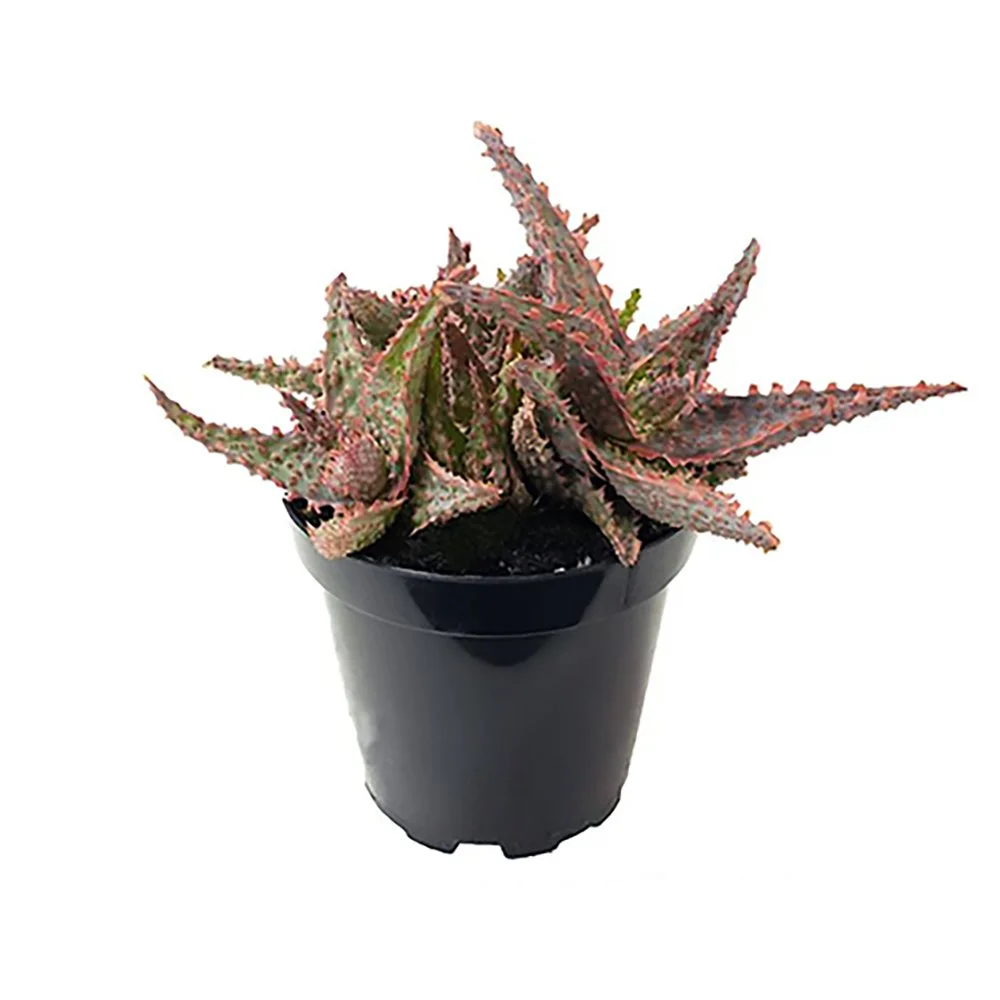
Aloe ‘Oik’, commonly known as Oik Aloe, is a distinctive dwarf hybrid developed by succulent breeder Karen Zimmerman, prized for its unusual texture and brilliant coloration. Its short, triangular, blue-green to green leaves feature irregular, raised pink to coral-red teeth along their margins, with additional bumps and ridges across the leaf surfaces. Under bright light, the foliage may develop striking reddish or purplish tones, making this compact aloe especially attractive in succulent collections and decorative containers.
This slow-growing, clumping succulent typically reaches 6–10 inches tall and 8–12 inches wide, gradually forming clusters of small rosettes. In spring, mature plants may produce slender flower stalks bearing tubular orange-to-reddish flowers that attract hummingbirds. Its unusual appearance and compact growth habit make it an excellent choice for small-space gardens and succulent arrangements.
Oik Aloe thrives in bright light to partial sun and requires porous, well-draining cactus and succulent soil. In hot Southwest climates, give it morning sun and afternoon shade to prevent scorching. Water thoroughly when the soil is completely dry, allowing excess moisture to drain away. Reduce watering during winter. Established plants tolerate high summer temperatures above 100°F with adequate shade, but prolonged exposure to extreme heat may cause stress. Protect from frost and temperatures below approximately 30–35°F. Best suited to USDA Zones 10–11, it also grows well in containers that you can move indoors during freezing weather.
Like other ornamental aloes, Oik Aloe should be considered potentially toxic to cats and dogs if ingested. Its sap may also cause digestive discomfort or skin irritation in sensitive individuals. Keep away from pets and children who may chew the leaves.
Oik Aloe is easiest to propagate by separating offsets that develop around the base of mature plants. Allow damaged surfaces to dry before planting in well-draining succulent soil. Vegetative propagation preserves this hybrid's distinctive characteristics.
Collectible: A named Karen Zimmerman hybrid introduced through the Huntington Botanical Gardens' International Succulent Introductions program in 2013. Its unusual raised leaf textures, coral-pink teeth, and seasonal coloration make it particularly appealing to specialty aloe collectors.
Aloe ‘Oik’, commonly known as Oik Aloe, is a distinctive dwarf hybrid developed by succulent breeder Karen Zimmerman, prized for its unusual texture and brilliant coloration. Its short, triangular, blue-green to green leaves feature irregular, raised pink to coral-red teeth along their margins, with additional bumps and ridges across the leaf surfaces. Under bright light, the foliage may develop striking reddish or purplish tones, making this compact aloe especially attractive in succulent collections and decorative containers.
This slow-growing, clumping succulent typically reaches 6–10 inches tall and 8–12 inches wide, gradually forming clusters of small rosettes. In spring, mature plants may produce slender flower stalks bearing tubular orange-to-reddish flowers that attract hummingbirds. Its unusual appearance and compact growth habit make it an excellent choice for small-space gardens and succulent arrangements.
Oik Aloe thrives in bright light to partial sun and requires porous, well-draining cactus and succulent soil. In hot Southwest climates, give it morning sun and afternoon shade to prevent scorching. Water thoroughly when the soil is completely dry, allowing excess moisture to drain away. Reduce watering during winter. Established plants tolerate high summer temperatures above 100°F with adequate shade, but prolonged exposure to extreme heat may cause stress. Protect from frost and temperatures below approximately 30–35°F. Best suited to USDA Zones 10–11, it also grows well in containers that you can move indoors during freezing weather.
Like other ornamental aloes, Oik Aloe should be considered potentially toxic to cats and dogs if ingested. Its sap may also cause digestive discomfort or skin irritation in sensitive individuals. Keep away from pets and children who may chew the leaves.
Oik Aloe is easiest to propagate by separating offsets that develop around the base of mature plants. Allow damaged surfaces to dry before planting in well-draining succulent soil. Vegetative propagation preserves this hybrid's distinctive characteristics.
Collectible: A named Karen Zimmerman hybrid introduced through the Huntington Botanical Gardens' International Succulent Introductions program in 2013. Its unusual raised leaf textures, coral-pink teeth, and seasonal coloration make it particularly appealing to specialty aloe collectors.