
 Image 1 of 4
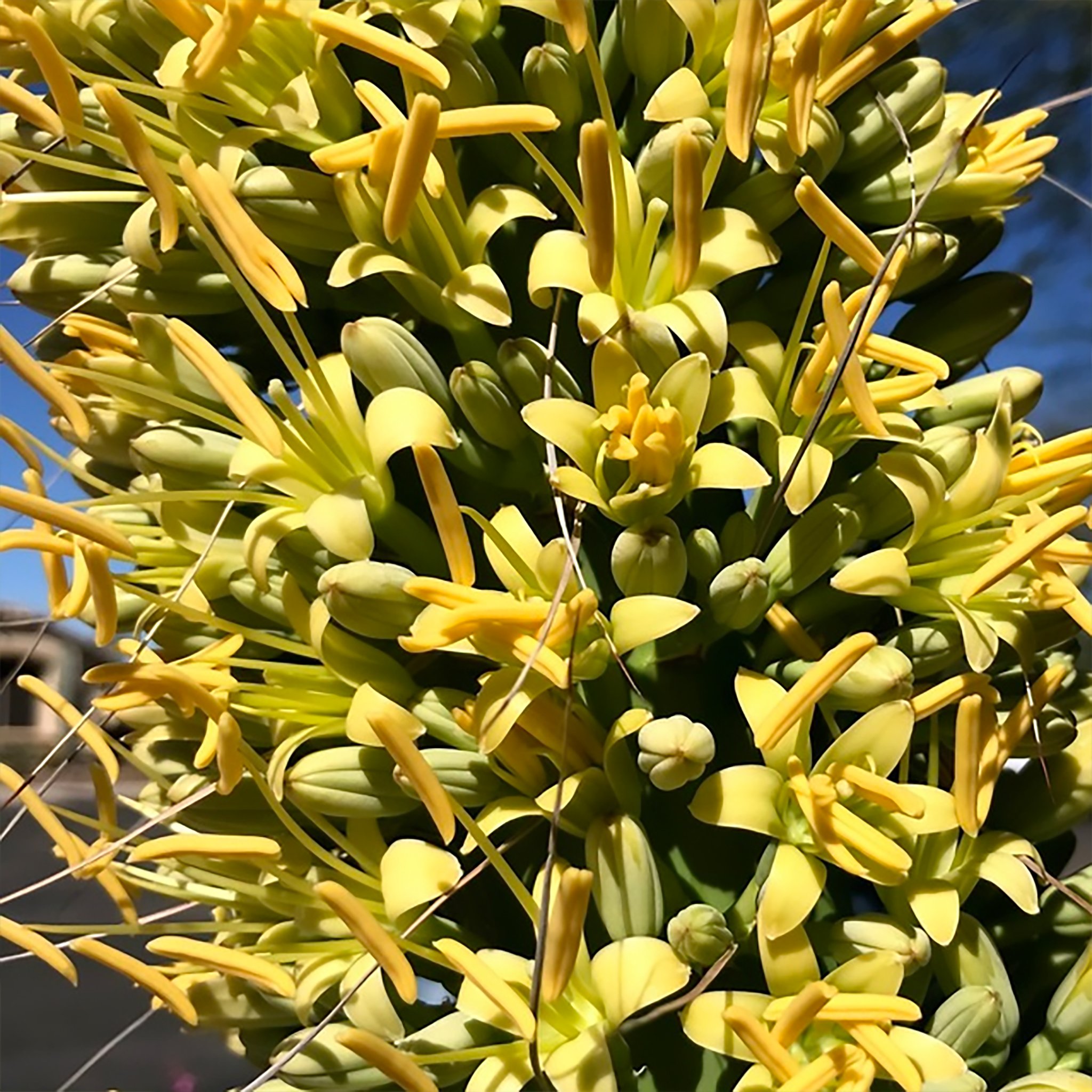 Image 2 of 4
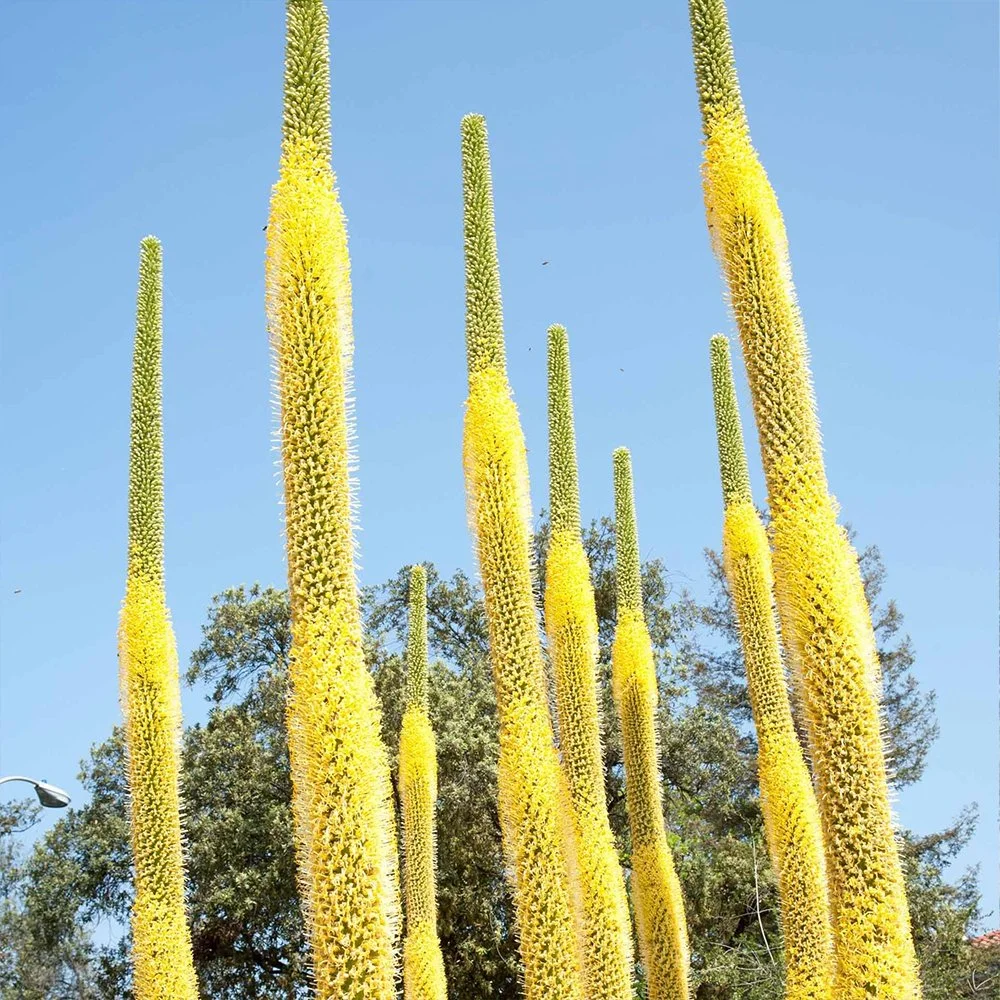 Image 3 of 4
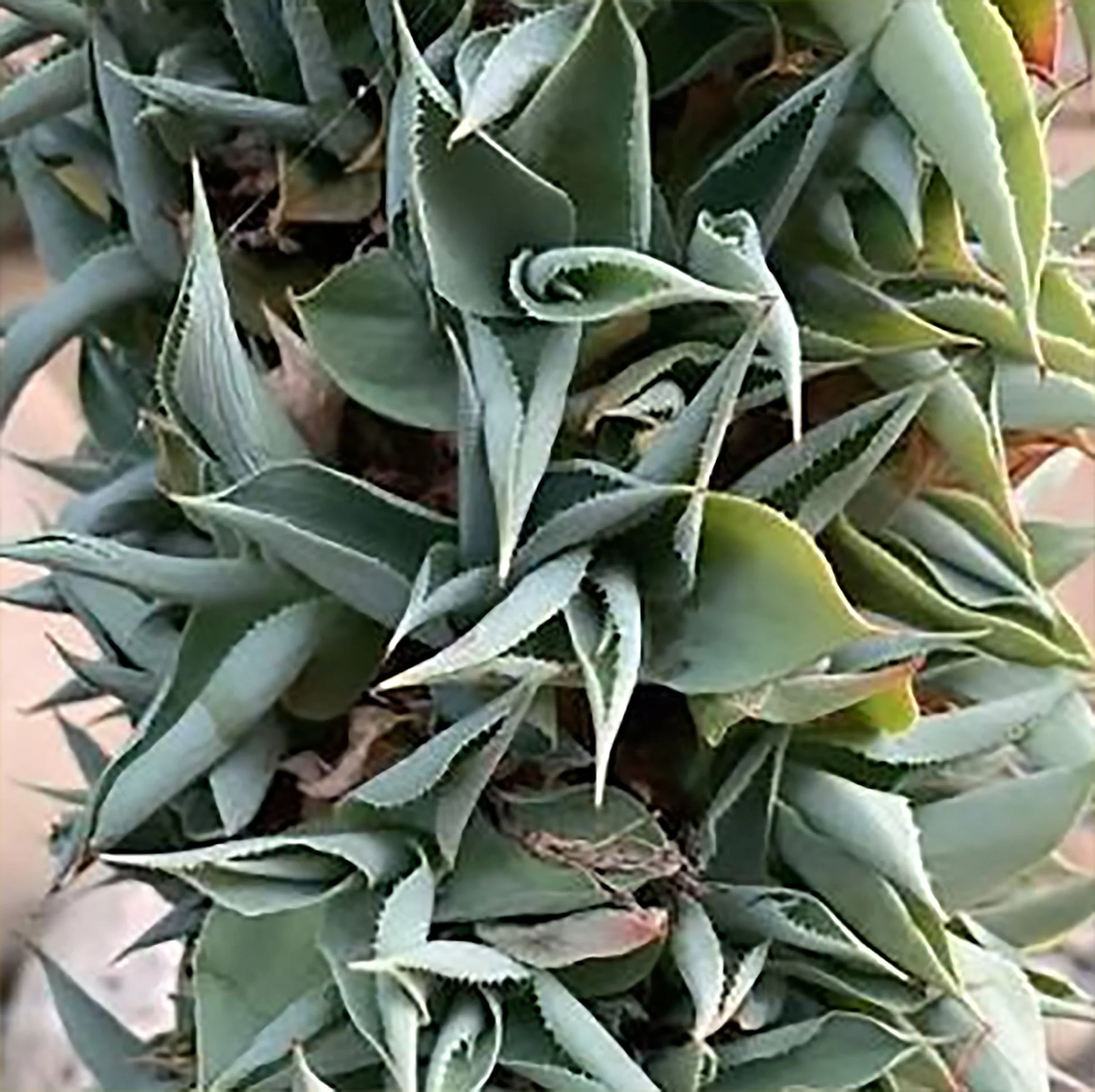 Image 4 of 4
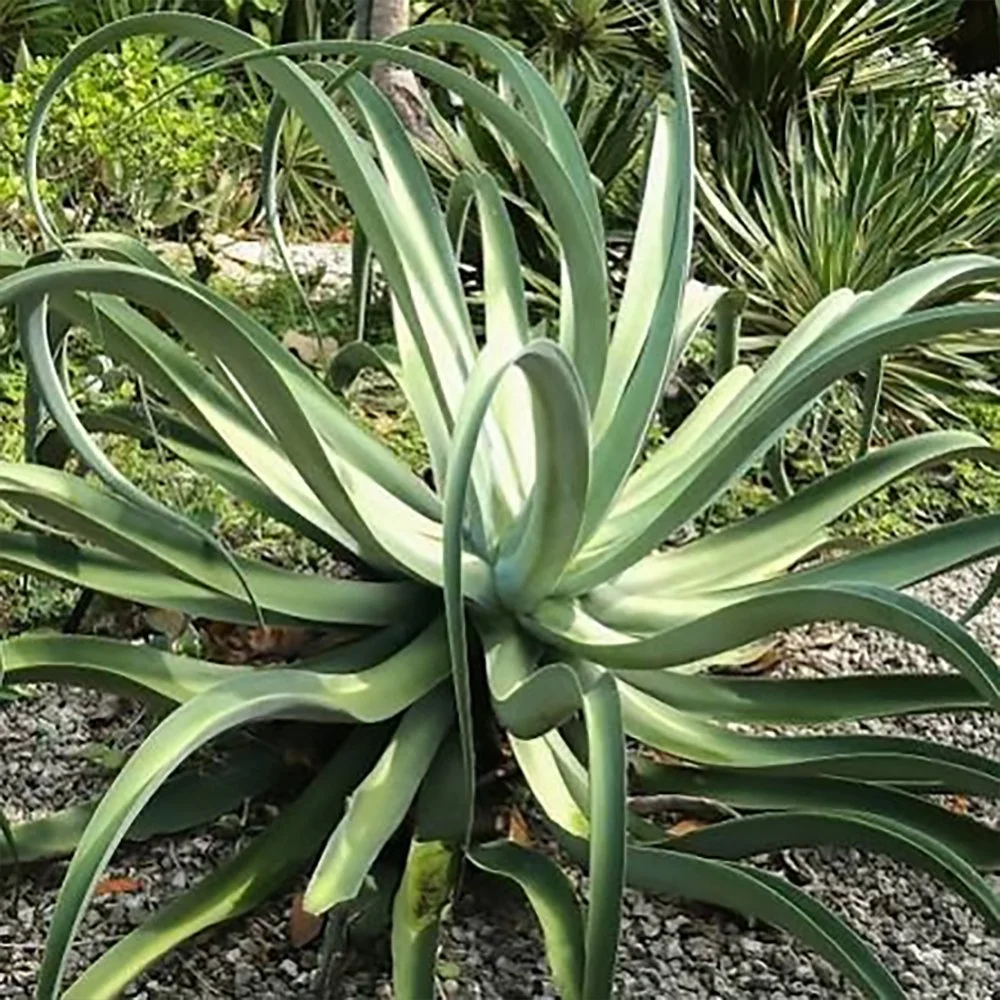
Agave vilmoriniana, commonly known as Octopus Agave, is a striking succulent native to the rocky slopes and canyons of western Mexico. Its long, narrow, blue-green to bright green leaves twist and arch outward, resembling an octopus's flowing tentacles. Unlike many agaves, its leaves have relatively smooth margins and a soft, flexible appearance, making it an attractive architectural accent for desert landscapes, xeriscape gardens, and large containers.
This moderately fast-growing agave typically reaches 3–4 feet tall and 5–6 feet wide at maturity. After approximately 7–10 years or longer, a mature plant may produce a spectacular flowering stalk reaching 10–15 feet tall, bearing clusters of pale yellow flowers that attract nectar-feeding wildlife. Like most agaves, Octopus Agave is monocarpic, meaning the main rosette dies after flowering. However, it frequently produces numerous bulbils (small plantlets) along the flowering stalk, allowing gardeners to grow a new generation of plants.
Octopus Agave thrives in full sun to partial shade and requires excellent drainage. In extremely hot desert climates, some afternoon shade helps protect the foliage from scorching. Water deeply but infrequently, allowing the soil to dry between waterings. Reduce irrigation significantly during winter. It tolerates summer temperatures above 100°F when properly acclimated, but prolonged extreme heat may cause stress, especially in containers. Established plants can withstand brief temperatures around 25–30°F, although frost may damage the leaves. Best suited to USDA Zones 9b–11, it can also be grown in containers and moved indoors during freezing weather.
Octopus Agave contains irritating sap and calcium oxalate crystals that may cause skin irritation and gastrointestinal discomfort if ingested. Keep away from curious pets and children, and wear gloves when handling cut leaves.
Octopus Agave is most easily propagated from bulbils produced along its flowering stalk. Once these plantlets develop enough, you can remove them and plant them in well-draining soil. You can also propagate from seed, though it is generally slower.
THESE SPECIMENS ARE 10-15 INCHES ACROSS AND SHIPPED BARE-ROOT.
Agave vilmoriniana, commonly known as Octopus Agave, is a striking succulent native to the rocky slopes and canyons of western Mexico. Its long, narrow, blue-green to bright green leaves twist and arch outward, resembling an octopus's flowing tentacles. Unlike many agaves, its leaves have relatively smooth margins and a soft, flexible appearance, making it an attractive architectural accent for desert landscapes, xeriscape gardens, and large containers.
This moderately fast-growing agave typically reaches 3–4 feet tall and 5–6 feet wide at maturity. After approximately 7–10 years or longer, a mature plant may produce a spectacular flowering stalk reaching 10–15 feet tall, bearing clusters of pale yellow flowers that attract nectar-feeding wildlife. Like most agaves, Octopus Agave is monocarpic, meaning the main rosette dies after flowering. However, it frequently produces numerous bulbils (small plantlets) along the flowering stalk, allowing gardeners to grow a new generation of plants.
Octopus Agave thrives in full sun to partial shade and requires excellent drainage. In extremely hot desert climates, some afternoon shade helps protect the foliage from scorching. Water deeply but infrequently, allowing the soil to dry between waterings. Reduce irrigation significantly during winter. It tolerates summer temperatures above 100°F when properly acclimated, but prolonged extreme heat may cause stress, especially in containers. Established plants can withstand brief temperatures around 25–30°F, although frost may damage the leaves. Best suited to USDA Zones 9b–11, it can also be grown in containers and moved indoors during freezing weather.
Octopus Agave contains irritating sap and calcium oxalate crystals that may cause skin irritation and gastrointestinal discomfort if ingested. Keep away from curious pets and children, and wear gloves when handling cut leaves.
Octopus Agave is most easily propagated from bulbils produced along its flowering stalk. Once these plantlets develop enough, you can remove them and plant them in well-draining soil. You can also propagate from seed, though it is generally slower.
THESE SPECIMENS ARE 10-15 INCHES ACROSS AND SHIPPED BARE-ROOT.