
 Image 1 of 3
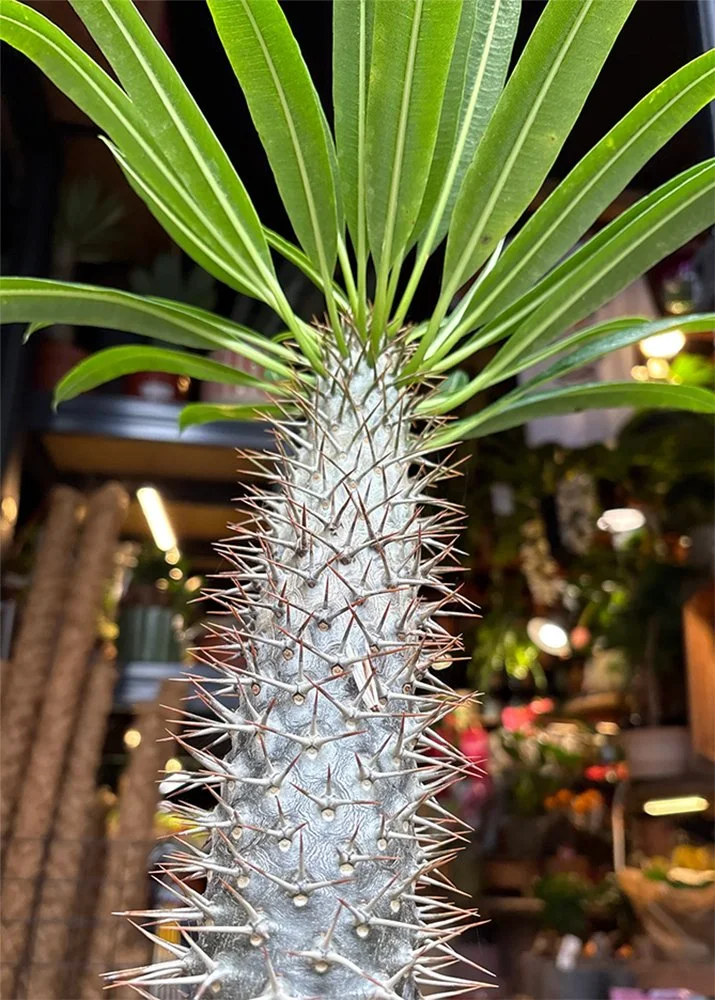 Image 2 of 3
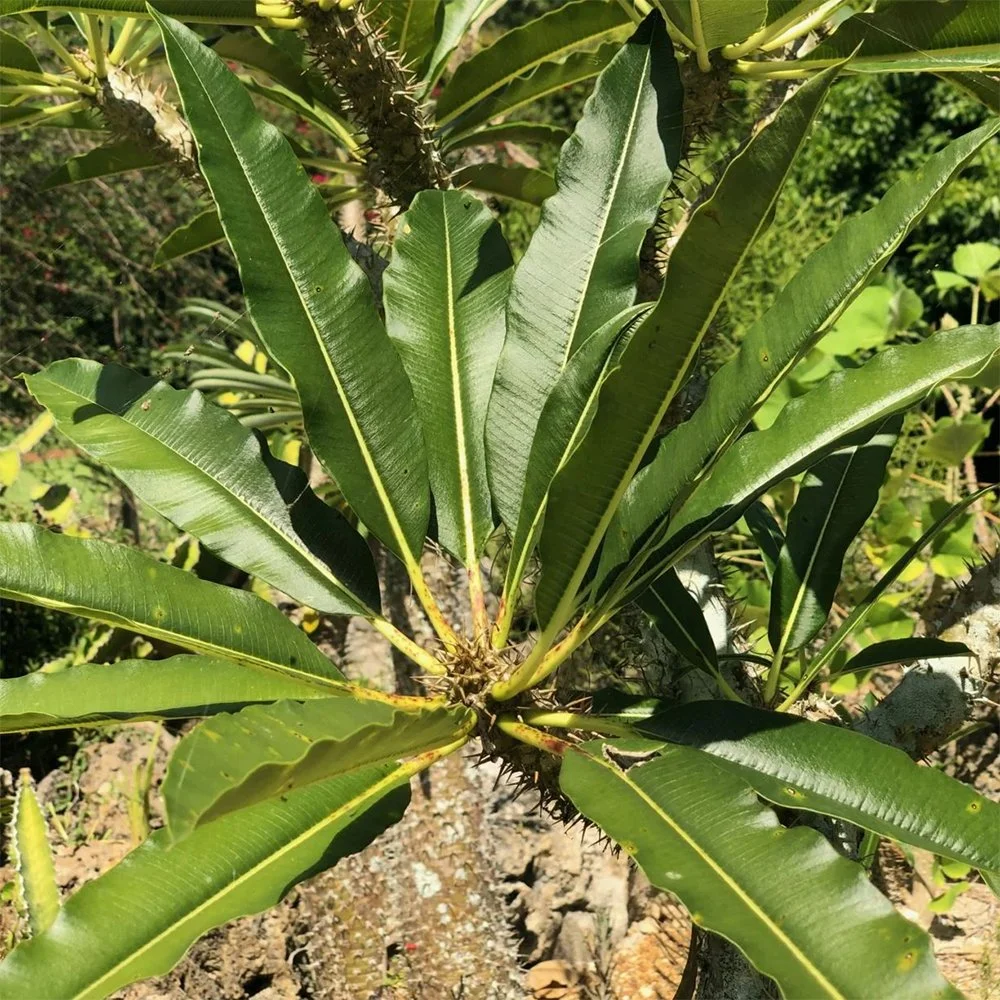 Image 3 of 3
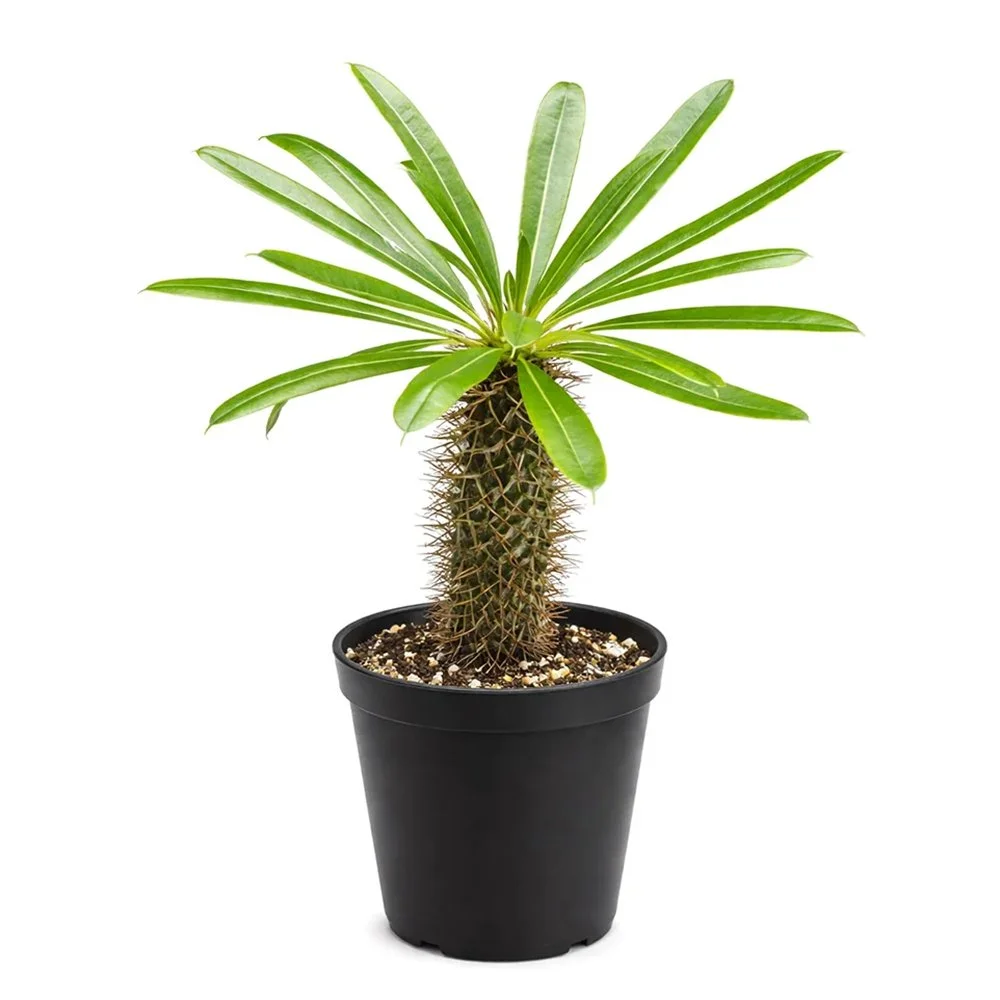
Pachypodium lamerei, commonly known as Madagascar Palm, is a striking, tree-like succulent native to Madagascar. Despite its common name, it is not a true palm but belongs to the dogbane family (Apocynaceae). Its thick, silvery-gray trunk is covered in sharp spines and topped with a crown of long, glossy green leaves, creating a dramatic, tropical appearance. As it matures, the trunk becomes increasingly sculptural, making this unusual succulent a standout in any plant collection.
Madagascar Palm is a relatively slow-growing succulent that can eventually reach 15–20 feet tall and 3–6 feet wide when grown outdoors in favorable conditions. Container-grown plants typically remain much smaller, often reaching 3–6 feet tall. Mature specimens may produce clusters of fragrant white flowers with yellow centers during spring and summer, although flowering is uncommon indoors.
This sun-loving succulent thrives in full sun to very bright light and requires fast-draining cactus and succulent soil. Water thoroughly during active growth, allowing the soil to dry between waterings, and reduce watering significantly during winter dormancy. Madagascar Palm prefers temperatures of 70–95°F and tolerates temperatures above 100°F when properly acclimated. Best suited to USDA Hardiness Zones 10b–11, it should be protected when temperatures fall below 40°F. In cooler climates, it makes an excellent container plant that you can move indoors during winter. Seasonal leaf drop is normal, particularly during cooler or drier conditions.
Note: Madagascar Palm contains toxic, irritating milky sap, and its sharp spines require careful handling. Keep away from pets and small children.
Specialty Status: Native to Madagascar, Pachypodium lamerei is prized by succulent enthusiasts for its distinctive spiny trunk, palm-like foliage, and architectural growth habit. Although widely cultivated, collectors especially value large, mature specimens.
THIS LISTING IS FOR A ROOTED SPECIMEN IN 4-INCH NURSERY POT.
Pachypodium lamerei, commonly known as Madagascar Palm, is a striking, tree-like succulent native to Madagascar. Despite its common name, it is not a true palm but belongs to the dogbane family (Apocynaceae). Its thick, silvery-gray trunk is covered in sharp spines and topped with a crown of long, glossy green leaves, creating a dramatic, tropical appearance. As it matures, the trunk becomes increasingly sculptural, making this unusual succulent a standout in any plant collection.
Madagascar Palm is a relatively slow-growing succulent that can eventually reach 15–20 feet tall and 3–6 feet wide when grown outdoors in favorable conditions. Container-grown plants typically remain much smaller, often reaching 3–6 feet tall. Mature specimens may produce clusters of fragrant white flowers with yellow centers during spring and summer, although flowering is uncommon indoors.
This sun-loving succulent thrives in full sun to very bright light and requires fast-draining cactus and succulent soil. Water thoroughly during active growth, allowing the soil to dry between waterings, and reduce watering significantly during winter dormancy. Madagascar Palm prefers temperatures of 70–95°F and tolerates temperatures above 100°F when properly acclimated. Best suited to USDA Hardiness Zones 10b–11, it should be protected when temperatures fall below 40°F. In cooler climates, it makes an excellent container plant that you can move indoors during winter. Seasonal leaf drop is normal, particularly during cooler or drier conditions.
Note: Madagascar Palm contains toxic, irritating milky sap, and its sharp spines require careful handling. Keep away from pets and small children.
Specialty Status: Native to Madagascar, Pachypodium lamerei is prized by succulent enthusiasts for its distinctive spiny trunk, palm-like foliage, and architectural growth habit. Although widely cultivated, collectors especially value large, mature specimens.
THIS LISTING IS FOR A ROOTED SPECIMEN IN 4-INCH NURSERY POT.